
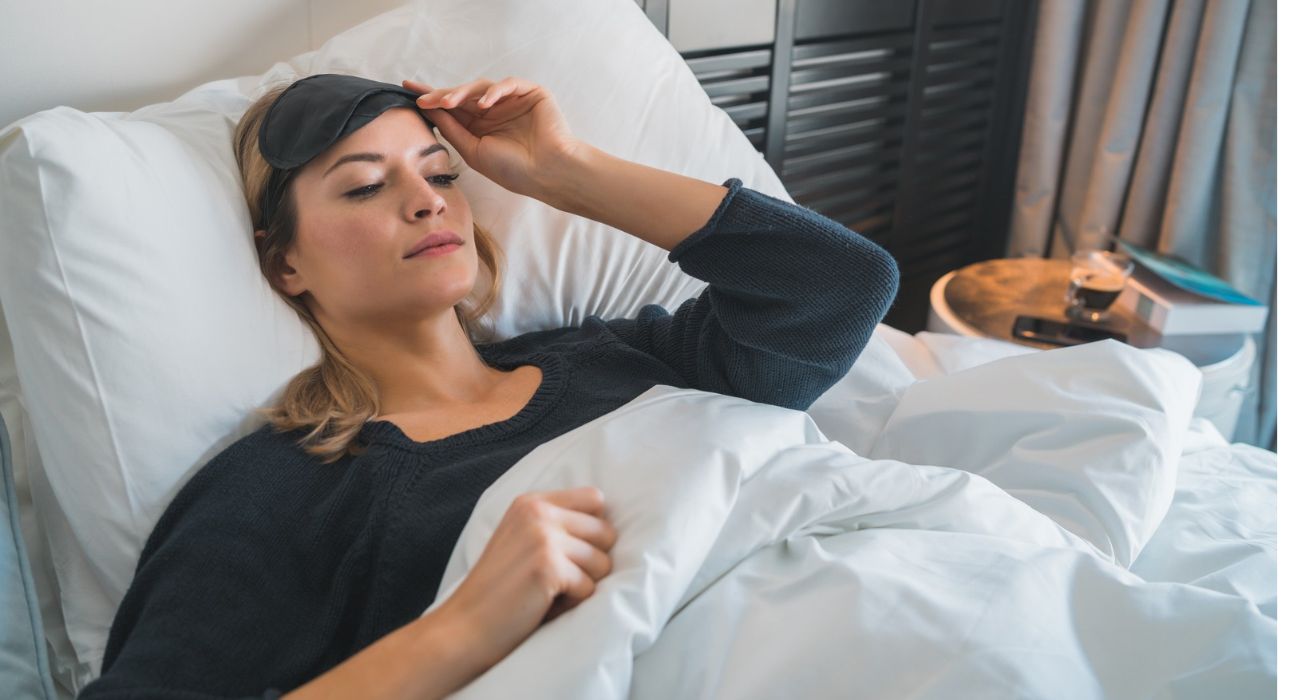
How about getting into bed at 10 p.m. because that is when you think you should sleep? Instead, you spend your nights tossing and turning, looking at the clock, browsing your mobile, and wondering why you do not sleep. Then comes the morning, but the period spent lying in bed has been much longer than the period of sleep. However, for people suffering from chronic insomnia, having more time in bed does not necessarily translate into sleeping for longer hours.
The extended hours spent awake in bed may cause frustration and inconsistency of sleep. Sleep restriction involves a temporary reduction in the amount of time one spends in bed, which aims at making the amount of time spent asleep in proportion to the time in bed. This article examines its structure, strengths, weaknesses, and cautions.
What Is Sleep Restriction Therapy?
One of the behaviour modifications included in CBT-I is called Sleep Restriction Therapy (SRT). This involves limiting the time one spends in bed to improve their sleep efficiency (Maurer et al., 2018). For instance, an individual can spend eight hours in bed, but only sleep five and a half hours. Their sleep efficiency would therefore be relatively low. Instead of continuing to spend eight hours in bed hoping to catch more sleep, SRT may initially create a shorter, carefully planned sleep window closer to the person’s actual sleep duration.
The intention is not to reduce the need for sleep on a permanent basis. Rather, what is intended is to increase the association of time spent in bed with sleeping. Multicomponent cognitive behavioural treatment of insomnia is a treatment suggested by the American Academy of Sleep Medicine for the condition of chronic insomnia, while sleep restriction is conditionally recommended as a single component (American Academy of Sleep Medicine, 2021).
Why Would Spending Less Time in Bed Help?
SRT is founded on the connection between sleep drive, time spent awake, and conditioned associations with bedtime. Insomniacs usually spend too much time in bed because of poor sleep and thereby offer more chances for being awake, worrying, watching the clock, etc. SRT temporarily reduces time available for these patterns, increasing sleep pressure and helping consolidate sleep (Edinger et al., 2021).

Proposed mechanisms include strengthening homeostatic sleep pressure, reducing excessive time in bed, and improving sleep regulation, although researchers continue studying how precisely the treatment works (Maurer et al., 2018). There is also a psychological component. If the bed repeatedly becomes a place where someone lies awake worrying about sleep, bedtime itself can become associated with frustration. SRT, usually alongside other CBT-I techniques, attempts to change this pattern.
How Does the Treatment Usually Work?
SRT does not simply involve choosing an arbitrary bedtime or cutting sleep by several hours. A qualified professional reviews the person’s sleep history and diary, assessing bedtimes, sleep onset, nighttime awakenings, waking time, and actual sleep duration (American Academy of Sleep Medicine, 2021). Based on this information, a sleep window can be developed.
For instance, when a person sleeps in bed for about eight hours while sleeping for about six hours, the prescribed sleep window will be closer to his actual sleep time. The exact schedule is individualised rather than being a universal formula. As sleep consolidates, the sleep window gradually expands. The 2025 VA/DoD guideline describes SRT as matching time in bed to actual sleep, increasing sleep drive, then extending it with monitoring (U.S. Department of Veterans Affairs & U.S. Department of Defence, 2025).
Sleep Efficiency Is the Key Measure
One of the central concepts in SRT is sleep efficiency. Suppose someone spends 8 hours in bed but sleeps for only 5.5 hours. Their sleep efficiency would be approximately 69%. If that person eventually sleeps for 6 hours within a 6.5- hour sleep window, their sleep efficiency would be approximately 92%. The goal is therefore not simply to maximise time in bed. It is to increase the proportion of that time that is actually spent sleeping.
Recent evidence supports this distinction. A meta-analysis done in 2025 from nine randomised controlled studies with 1,239 participants showed that SRT had a positive effect on different aspects of insomnia such as sleep efficiency, sleep latency, sleep quality, and time of wakefulness after sleep onset (Wei et al., 2025). The meta-analysis also discovered a decrease in the total sleep time immediately after the procedure, which is normal because of its nature (Edinger et al., 2021).
Is Sleep Restriction Just Getting Less Sleep?
No. And this may be the most critical distinction. Sleep deprivation entails not getting enough sleep with no medical reason in mind. It could be someone who stays up late to study, works late into the night for several days, or chooses not to get enough sleep due to their hectic schedule. Sleep restriction therapy is different since it is an organized behavior intervention that attempts to control the amount of sleep someone gets (American Academy of Sleep Medicine, 2021).
Sleep restriction therapy gradually increases time in bed as sleep consolidates; its goal is not permanent sleep reduction. Without professional guidance, restricting sleep may cause excessive daytime sleepiness and impaired functioning, with clinical guidance noting transient sleepiness as a potential CBT-I consequence (Cheng et al., 2020).
What Are the Potential Benefits?
When appropriately delivered, SRT may help people:
- fall asleep more efficiently
- spend less time awake in bed
- experience fewer prolonged periods of wakefulness during the night
- develop a more consistent sleep schedule
- improve sleep efficiency
- reduce some symptoms associated with chronic insomnia (Wei et al., 2025).
The wider CBT-I technique has considerable backing from various clinical recommendations and is suggested as a first-line therapy for chronic insomnia among adults (Riemann et al., 2023).
What Are the Limitations?
Sleep restriction therapy can be challenging, particularly at the beginning. Sleep restriction therapy may temporarily increase daytime tiredness or sleepiness because the prescribed sleep window is shorter (Cheng et al., 2020). Consistency is essential; frequent bedtime changes, long naps, or extending time in bed after poor sleep can interfere with the treatment’s behavioural goals and adherence. Insomnia may coexist with sleep apnea, circadian disorders, medical conditions, or mental-health difficulties, requiring proper assessment before SRT (Sweetman et al., 2020).
Who Should Use Caution?
Not all individuals who struggle with sleeping problems can practice sleep restriction on their own. According to the 2025 VA/DoD guidelines, adaptation, deferral, or monitoring of CBT-I therapy can be considered in patients with excessive daytime sleepiness, medical instability, uncontrolled seizures, bipolar disorder, acute mental disorders, pregnancy, postpartum insomnia, or falls. Because changes in sleep can be clinically important in bipolar disorder, the VA/DoD guideline recommends appropriate caution and monitoring when delivering CBT-I (U.S. Department of Veterans Affairs & U.S. Department of Defence, 2025). In addition, CBT-I therapy can be useful for patients with OSA, although daytime sleepiness should be assessed carefully (Sweetman et al., 2020).
Why Professional Guidance Matters
The idea behind Sleep restriction therapy can sound deceptively simple: spend less time in bed. But the process includes assessment, calculation, monitoring, adjustments, and taking into account the overall health of the individual. A professional delivering CBT-I can diagnose whether the condition of insomnia is the right one to address, find an individual sleep window, evaluate sleep efficiency and function during the day, and make any required adjustments (American Academy of Sleep Medicine, 2021). SRT increases sleep pressure temporarily, and the recommendation for the year 2025 is to have it delivered by professionals (U.S. Department of Veterans Affairs & U.S. Department of Defence, 2025).
Conclusion
The idea of restricting sleep seems somewhat paradoxical because how can sleep restriction help with the problem of insomnia? Here comes the explanation. The main principle of Sleep Restriction Therapy is not to train the organism to get used to having less sleep. Instead, it involves the temporary alignment of time spent in bed with the amount of sleep. This increases sleep pressure and sleep efficiency. Furthermore, the sleep period is gradually extended as sleep becomes more consolidated.
SRT can play a significant role in the treatment of chronic insomnia from the standpoint of CBT-I (World Sleep Society International Guidelines Committee, 2023). However, the treatment cannot be performed independently by patients. Due to the very essence of the treatment, when sleep opportunity is changed, this may result in excessive sleepiness during the day. Therefore, professionals should develop an individualised treatment plan for each person under appropriate supervision (Cheng et al., 2020).
References +
- American Academy of Sleep Medicine. (2021). Behavioural and psychological treatments for chronic insomnia disorder in adults: An American Academy of Sleep Medicine clinical practice guideline. Journal of Clinical Sleep Medicine, 17(2), 255–262. https://doi.org/10.5664/jcsm.8986
- Cheng, P., Kalmbach, D., Fellman-Couture, C., Arnedt, J. T., Cuamatzi-Castelan, A., & Drake, C. L. (2020). Risk of excessive sleepiness in sleep restriction therapy and cognitive behavioural therapy for insomnia: A randomised controlled trial. Journal of Clinical Sleep Medicine, 16(2), 193–198. https://doi.org/10.5664/jcsm.8164
- Edinger, J. D., et al. (2021). Behavioural and psychological treatments for chronic insomnia disorder in adults: An American Academy of Sleep Medicine systematic review, meta-analysis, and GRADE assessment. Journal of Clinical Sleep Medicine, 17(2), 263–298. https://doi.org/10.5664/jcsm.9090
- Maurer, L. F., Espie, C. A., & Kyle, S. D. (2018). How does sleep restriction therapy for insomnia work? A systematic review of mechanistic evidence and the introduction of the Triple-R model. Sleep Medicine Reviews, 42, 127–138. https://doi.org/10.1016/j.smrv.2018.07.005
- Riemann, D., et al. (2023). The European Insomnia Guideline: An update on the diagnosis and treatment of insomnia 2023. Journal of Sleep Research, 32(6), e14035. https://doi.org/10.1111/jsr.14035
- Sweetman, A., et al. (2020). The effect of cognitive and behavioural therapy for insomnia on week-to-week changes in sleepiness and sleep parameters in patients with comorbid insomnia and sleep apnea: A randomised controlled trial. Sleep, 43(7), zsaa002. https://doi.org/10.1093/sleep/zsaa002
- U.S. Department of Veterans Affairs & U.S. Department of Defence. (2025). VA/DoD clinical practice guideline for the management of chronic insomnia disorder and obstructive sleep apnea.
- Wei, J., Yang, F., Li, C., Dong, X., & Liu, Y. (2025). The effect of single-component sleep restriction therapy for insomnia in adults: A meta-analysis of randomised controlled trials. Journal of Sleep Research. https://doi.org/10.1111/jsr.70200
- World Sleep Society International Guidelines Committee. (2023). World Sleep Society international sleep medicine guidelines position statement endorsement of “Behavioural and psychological treatments for chronic insomnia disorder in adults.” Sleep Medicine, 108, 1–3. https://doi.org/10.1016/j.sleep.2023.07.001