depression
Health

The Role of Antidepressants in Major Depressive Disorder

Major Depressive Disorder is characterised by the feelings of hopelessness, worthlessness, lack of interest in day to day activity, insomnia or hypersomnia, vegetative symptoms etc. The symptoms of major depressive episodes should persist for two weeks, and one of the important symptoms, i.e., lack of interest, should be present. Major Depressive Disorder is categorised under

Read More
Clinical

Aphanisis and the Changing Nature of Sexual Desire: A Psychological Perspective

Aphanisis was derived from a Greek term associated with disappearance or vanishing. The term was proposed by Psychoanalyst Ernest Jones in the 1920s while discussing the development of feminine sexual life. He suggested that the loss of sexual pleasure, a fearful experience, has great psychological significance, and he argued it could be even more fundamental

Read More
Brain Health

Frontotemporal Dementia (FTD): Causes, Symptoms, Diagnosis, and Treatment

The group of neurodegenerative disorders that initially affect the frontal and temporal lobes of the brain are known as frontotemporal dementia (FTD). For example a loved one who suddenly begins acting in ways that feel unrecognizable and doing inappropriate acts at inappropriate moments, struggling to act and express to find simple words. It often presents

Read More
Health

Exploring the Role of Psycho-Oncology in Cancer Care

Cancer is an umbrella term that is used to indicate the abnormal growth of cells in the body. When the cells grow abnormally and start to cross boundaries and spread throughout the body, individuals experience pain. These cells later invade other body parts and organs. There are several types of cancer, such as lung, Breast,

Read More
Health

Factitious Disorder: Understanding the Causes, Symptoms, and Psychological Factors

An individual keeps visiting the hospital with genuine symptoms, goes through testing, and is clearly desperate for answers. But on some occasions, the disease is actually self-induced or even completely fake. Factitious disorders are more than just “pretending to be sick.” They are rather complicated psychological conditions where an individual tries to appear sick or

Read More
Therapy

Understanding Monotherapy in Mental Health

Imagine a physician giving a prescription for depression, epilepsy, hypertension or another chronic illness that includes only one medicine, where other doctors have already prescribed multiple medications and combined treatments. Is it best that the doctor uses just one medicine for you? A  single-treatment therapy, also known as monotherapy, refers to using a single medication

Read More
Clinical

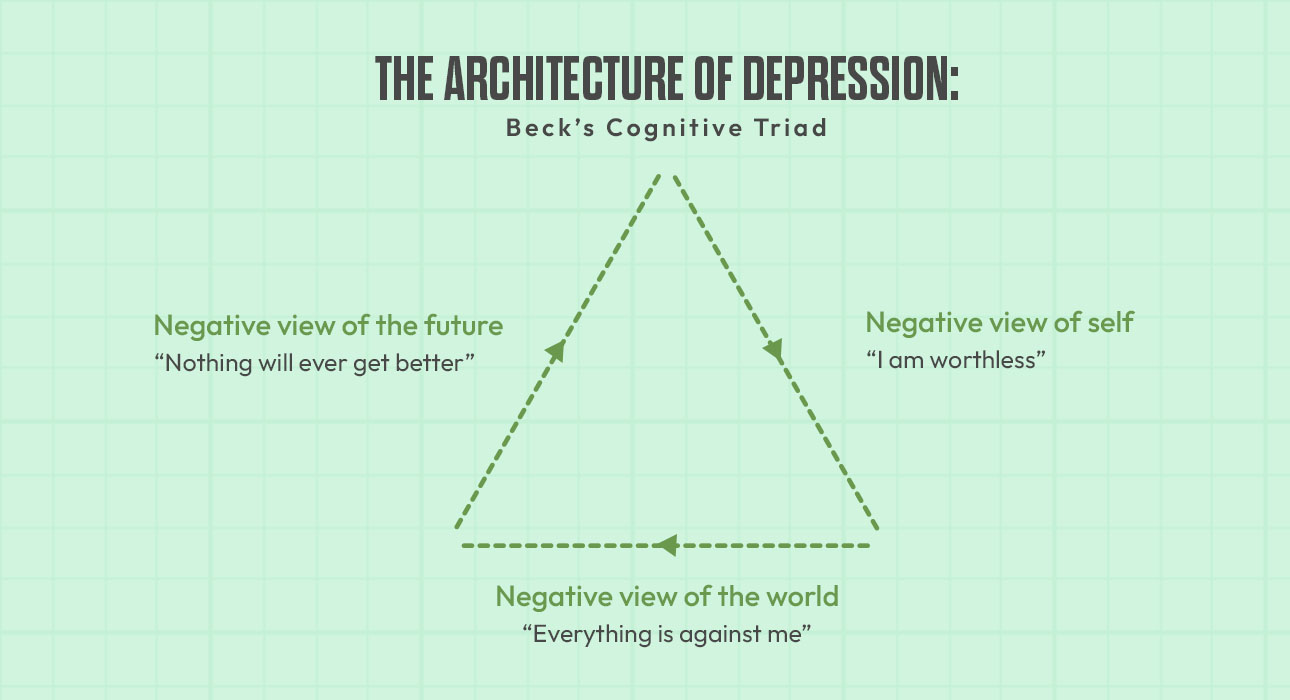
The Architecture of Depression: Beck’s Cognitive Triad

Until the 20th century, two competing views of depression dominated clinical understanding:  the psychoanalytic one, where one took a stand as “anger turned inward,” and the behavioural one,  where it was viewed as a byproduct of environmental reinforcement, the only plausible explanation  of the phenomenon as the result of “our environment.”  But in the 1960s,

Read More
Health Psychology

Alzheimer’s Disease: Understanding Its Impact, Causes, and Care Strategies

Alzheimer’s disease is a neurological condition that has a major impact on the brain and its functioning. Cognitive abilities, including reasoning, problem-solving, and memory, deteriorate as a result of this type of dementia. Dr Alois Alzheimer first brought a patient of this disease into the public eye in the year 1907. The patient was a

Read More
Stress

The Role of the Hypothalamus in Stress Responses: Fight, Flight, or Freeze

In our daily life, we encounter many stressful situations, be it environmental, such as work deadlines, family arguments or psychological problems, such as worrying about exams, losing a job. An event of stress leads to physical, behavioural, and psychological reactions by the human body. This article dives into the details of the stress response system

Read More
Children

When Words Fail, Play Speaks: Understanding the Power of Play Therapy

While sometimes emotions are subtle or overwhelming, children do not always know how to put them into words. Just as adults sometimes need to talk through their problems, sometimes it works for children to express themselves in the language they know best: play. Play therapy uses a structured and theoretically based approach through the medium

Read More