






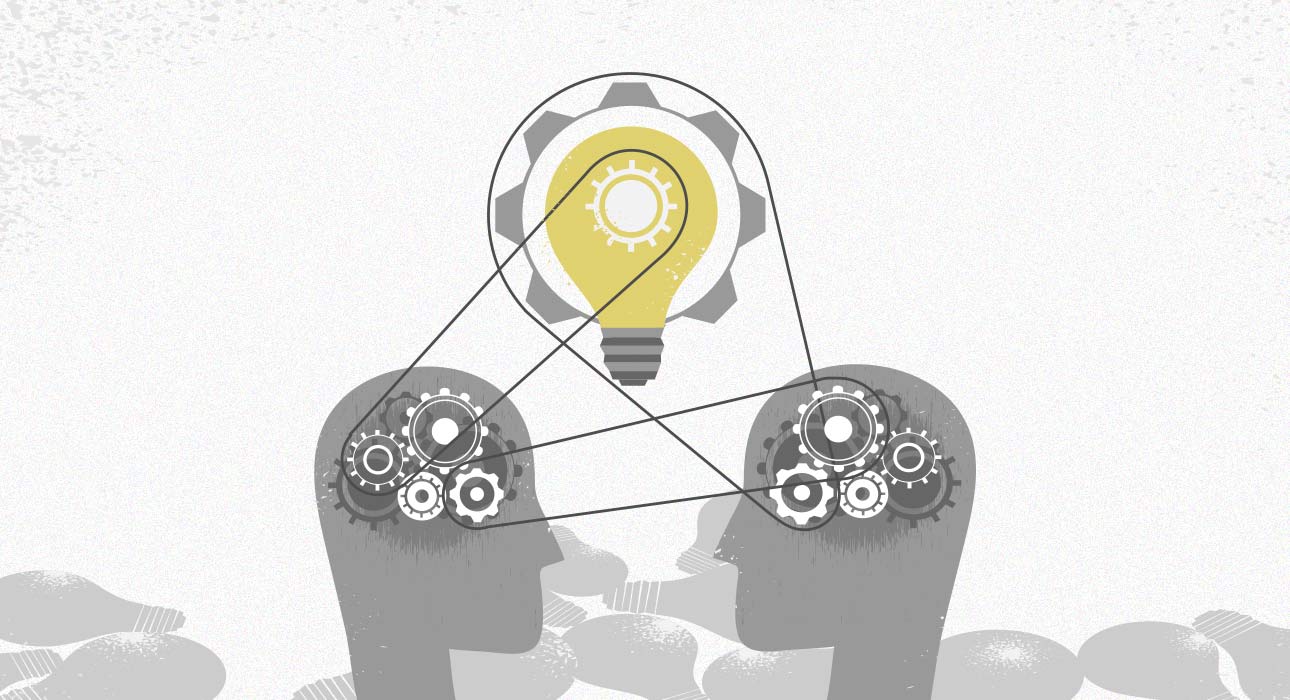
Our mind is like a detective that never stops trying to figure out what is going on around us. It is curious to know why things happen. For example, when a car suddenly zig zags in traffic, the human mind wants to know why the car swerved. Is the driver of the car not paying attention? Did an animal run into the road? This is what Attribution Theory is about.
In psychology, attribution is the process of explaining why things happen or why people behave in certain ways or what causes things to happen. It is the framework humans use to make sense of the social world. By identifying “why” something happened, individuals create a predictable environment (Heider, 1958). They guide how they judge others. They shape how they perceive their own potential for success or failure.
The Internal vs.External Divide
The most fundamental layer of attribution was established by Fritz Heider in 1958. He identified a core distinction between Internal (Dispositional) and External (Situational) factors.
1. Internal Attribution
When people see how someone behaves, they usually think it is because of the kind of person they are. We think about their personality, how smart they are, and what their character is. For example, if a colleague shows up late for a meeting, others might think that our colleague is not considerate of people’s time, or our colleague just does not care about being on time. In a classic 1967 study, participants read essays where the writers were forced to take a specific political stance. Despite knowing the writer was assigned the topic, participants still rated the writer’s internal beliefs as matching the essay, scoring them at 59.6 on a 70-point scale of perceived sincerity (Jones & Harris, 1967).
2. External Attribution
The cause is because of things in the environment. When a colleague is absent or arrives late, people practising external attribution look beyond personality flaws. Instead of assuming the individual is “unreliable,” the observer considers external pressures. For instance, the mind might conclude that the colleague was delayed by an unusually heavy traffic jam or was detained by an urgent, unforeseen emergency call (Heider, 1958). A massive meta-analysis of 173 independent studies revealed that humans are 30% more likely to blame the situation for their own failures than they are for the failures of those around them. (Malle, 2006).
Logical Processing: The Covariation Model
Harold Kelley (1967) expanded this framework. He proposed that people use a logical, three-part filtering system to decide if a behaviour is truly “who someone is.” This is known as the Covariation Model.
- Consensus: Do others act this way in the same situation? If every employee is struggling with a new software update, the software is likely the problem (High Consensus). If only one person struggles, it suggests a lack of skill (Low Consensus). (Kelley, 1967).
- Distinctiveness: Does this person behave like this everywhere they go? Like, if a student only keeps to themselves in math class, maybe it’s the subject that’s the issue. If they are quiet in all social situations and classes, they are a naturally quiet person. (Kelley, 1967).
- Consistency: Does the behaviour happen every time the situation arises? If a friend always forgets his wallet when dining out, it is seen as a personality trait (High Consistency). If it happens only once, it is viewed as a fluke (Low Consistency). (Kelley, 1967).
The “Glitch” in Perception: Common Biases
Despite the logical framework of the Covariation Model, human judgment is frequently derailed. Mental shortcuts take over. These biases are universal. They often lead to social friction. (Ross, 1977)
- The Fundamental Attribution Error (FAE): It describes the tendency to overemphasise personality traits while ignoring situational power when judging others. Ross (1977) coined this term to describe how the “person” is more visible to us than the “situation.” We see the actor, but we miss the stage.
- The Actor-Observer Bias: When an individual makes a mistake (the actor), they are acutely aware of situational pressures. They feel tired. They feel stressed. However, when they watch someone else make the same mistake (the observer), they ignore those pressures. They blame the person’s character instead (Malle, 2006).
- Self-Serving Bias: This is a protective mechanism for the ego. When things go well, individuals attribute the success to their own talent (Internal). When things go poorly, they blame bad luck or unfair circumstances (External). Zuckerman (1979) notes this helps maintain self-esteem in the face of failure.
Real-World Applications
1. The Insightful Manager
A leader with high emotional intelligence looks past the surface. When a project freezes, this manager does not default to “lazy” or “unmotivated.” They dig deeper. They look for external factors. By identifying these Situational Attributions, the manager provides the necessary resources. They don’t just criticise; they solve the systemic issue (Heider, 1958).
2. The Defensive Employee
Some employees use the Self-Serving Bias as a shield (Zuckerman, 1979). This is a cognitive shortcut where an individual takes credit for wins but blames the universe for losses. If a project fails, this employee immediately points outward. They blame the deadline and blame their coworkers. They blame the “unclear instructions People do not want to admit when they make mistakes or do not try hard enough, which is called Internal Attribution.
In Mental Health and Achievement, Bernard Weiner (1985) applied these concepts to achievement. He found that how people explain their failures determines their future persistence. In Education, a student failing a test might be attributed internally to “lack of intelligence” or externally to “insufficient study time” or “family distractions.” In sports, a player missing a shot may be seen as not skilled (internal) or as having been blocked by a strong opponent (external).
Practical Strategies to Reduce Attribution Biases
- Pause Before Judging: Take time to consider external factors influencing behaviour rather than jumping to character-based conclusions. (Ross, 1977).
- Seek Additional Information: Ask questions to clarify context, like “Was there something unusual that caused the delay?”
- Practice Empathy: Imagine the situation from the other person’s perspective. (Malle, 2006).
- Encourage Feedback Acceptance: Help employees understand that constructive criticism targets behaviour, not character.
- Reflect on Own Biases: Regularly check if individuals are falling prey to Fundamental Attribution Error or self-serving biases. (Zuckerman, 1979).
These steps foster more accurate perceptions, reduce conflict, and support personal and professional growth.
Conclusion: Cultivating Mindful Judgment
We see the actor, but we are blind to the stage
Lee Ross (1977)
Attribution Theory says that there’s always much more to a story than meets the eye. When someone acts a certain way, people tend to assume something about their character. Often, the situation that surrounds them is a very significant factor. This gradual shift from immediate judgment to thoughtful empathy not only enhances our relationships but also helps us as human beings. Attribution, ultimately, instructs us to see beyond looking at the surface to seeing people with empathy and also understanding all the forces that exist in a relationship, shaping what they do for a complex cocktail of factors.
Read More from UPS Education:
- Diathesis Stress Model: From Predisposition to Psychological Disorder
- How Stress Affects the Immune System: The Mind Body Connection
- The Role of the Prefrontal Cortex in Executive Functioning
- The Role of the Limbic System in Emotion and Behaviour
References +
- Heider, F. (1958). The psychology of interpersonal relations. John Wiley & Sons.
- Jones, E. E., & Harris, V. A. (1967). The attribution of attitudes. Journal of Experimental Social Psychology, 3(1), 1–24. https://doi.org/10.1016/0022-1031(67)90034-0
- Kelley, H. H. (1967). Attribution theory in social psychology. Nebraska Symposium on Motivation, 15, 192–238.
- Malle, B. F. (2006). The actor-observer asymmetry in attribution: A (surprising) meta-analysis. Psychological Bulletin, 132(6), 895–919. https://doi.org/10.1037/0033-2909.132.6.895
- Ross, L. (1977). The intuitive psychologist and his shortcomings: Distortions in the attribution process. Advances in Experimental Social Psychology, 10, 173–220. https://doi.org/10.1016/S0065- 2601(08)60357-3
- Weiner, B. (1985). An attributional theory of achievement motivation and emotion. Psychological Review, 92(4), 548–573. https://doi.org/10.1037/0033-295X.92.4.548
- Zuckerman, M. (1979). Attribution of success and failure revisited, or: The motivational bias is alive and well in attribution theory. Journal of Personality, 47(2), 245–287. https://doi.org/10.1111/j.1467- 6494.1979.tb00202.x
- Fiske, S. T., & Taylor, S. E. (1991). Social Cognition (2nd ed.). McGraw-Hill.
- Jones, E. E., & Harris, V. A. (1967). The attribution of attitudes. Journal of Experimental Social Psychology, 3(1), 1-24. https://doi.org/10.1016/0022-1031(67)90034-0
Leave feedback about this