
Emotions are a pattern of complex interactions of physiological, experiential, and behavioural patterns. The nature of emotions depends on the nature of significant events. For instance, if the event involves rejection of ideas or disapproval, shame is likely to be produced. The word emotions has its root in the Latin word ‘Emovere ’, which simply means to ‘stir up’. From the evolutionary perspective, emotions help us to survive and detect threats or danger.
The complex evolution has enabled humans to experience an array of emotional experiences. Primarily, there are six basic emotions, which are: Happiness, Sadness, Anger, Guilt, Surprise, Disgust, Fear. These basic emotions were a result of Paul Ekman’s extensive work and research on emotions and facial gestures(Ekman,1970; APA,2018 ). This article will explore the pioneer behind the wheel of emotion, the theoretical origin of the wheel of emotions, postulates of Plutchik’s theory and Geneva’s Wheel of Emotions.
Read More: Theories of Emotion in Psychology: James-Lange to Schachter-Singer Explained
Who was the Pioneer Behind the Wheel of Emotions?
Robert Plutchik was born on October 21, 1927. After receiving a full scholarship from City College of New York, he went to earn a master’s and a doctoral degree at Columbia University. He went on to teach at Hofstra, Columbia and Long Island University; he then became a professor of psychiatry and psychology at the Albert Einstein College of Medicine. Robert Plutchik was a fellow member of the American Psychological Association and the International Society for Research on Emotions.
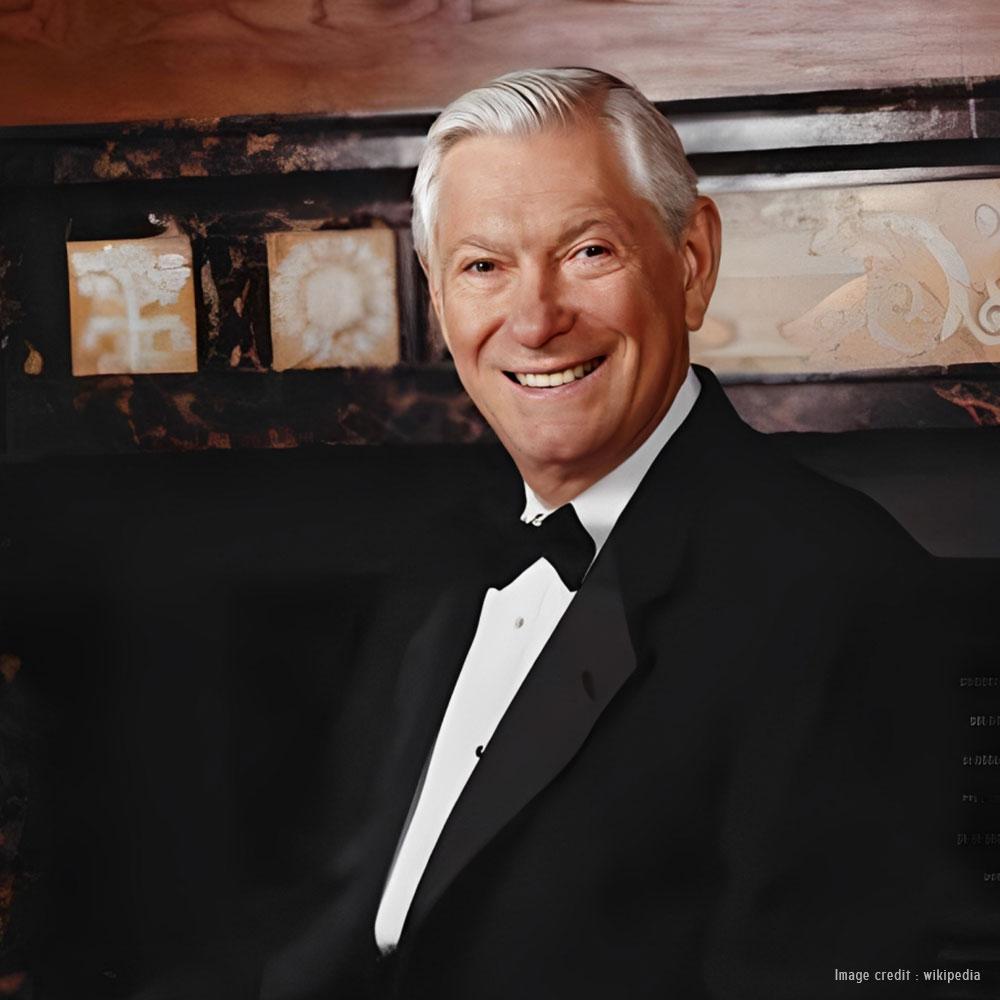
He published several research papers on various topics, but one of his famous works, which is widely discussed, is his book on emotions, “ The Emotions: Facts, Theories and New Models”, which was published in 1962. His work built a bridge between the older world of psychology and the contemporary world.
In his recent book, ‘Emotions and Life: Perspectives from Psychology, Biology and Evolution ’, which was published in 2003, he included new topics such as the history of emotion research, the language and measurement of emotion, facial expressions, emotion and the brain, etc. (Buck et al.,2007).
Wheel of Emotions
The wheel of emotions was illustrated by Robert Plutchik in the 1980s. This model of emotion has its theoretical underpinnings in The PsychoEvolutionary Theory of Emotions. Plutchik argued that emotions can be best explained by the evolutionary lens because this perspective helps in understanding why emotions exist in animals and what role emotions play in shaping behaviour.
Structure of the Wheel
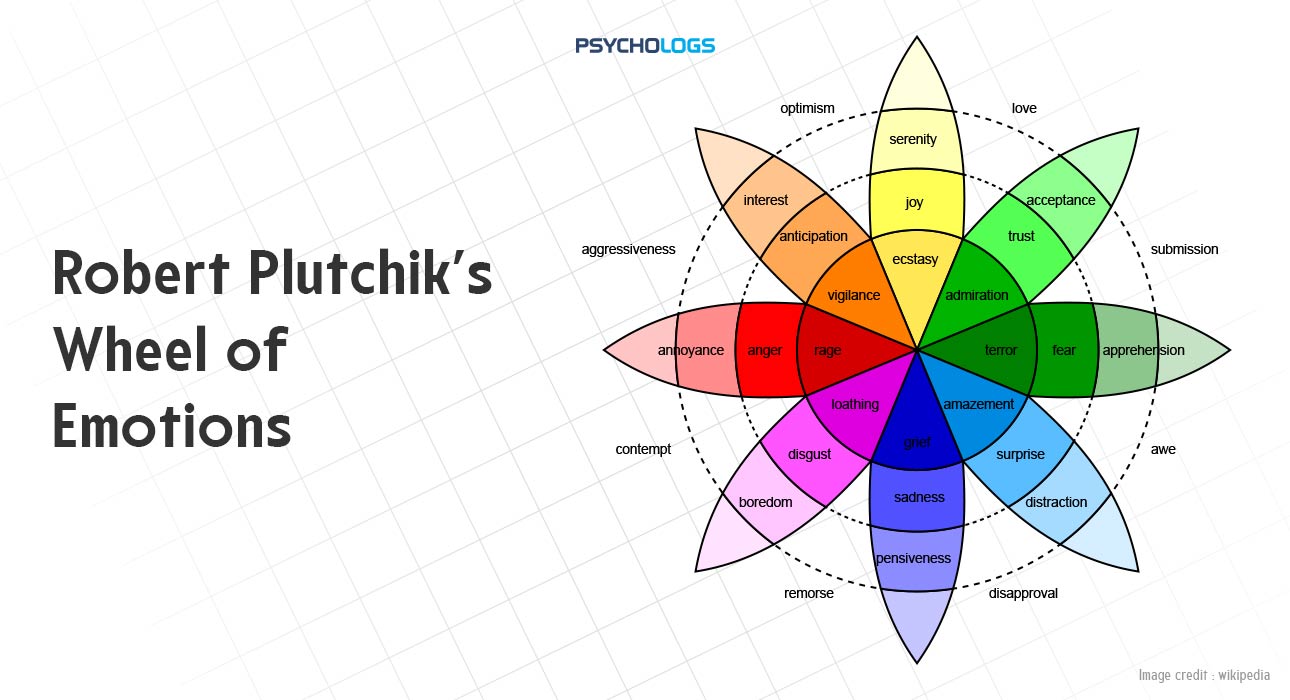
The Wheel of Emotions illustrated by Plutchik is a flower with eight petals located inside an octagon. The eight petals symbolise the eight core emotions and are placed in such a way that they are opposites to each other. For example: In his wheel of emotion, Plutchik has placed grief as a polar opposite to Joy, Rage opposite to fear, etc. The core emotions are placed in the second circle.
The colour of the petals brightens as the intensity of emotions increases. For example: The colour brightens as the intensity moves from annoyance-anger-rage; acceptance – trust-admiration. The emotions in the outer layer have soft colours, whereas the more intense emotions are dark in colour. The wheel of emotions also explains the increasing intensity between two emotions.
The Eight Core Emotions and Their Intensity
Here is the list of those eight core emotions along with increasing intensity:
- Joy extends from serenity to ecstasy.
- Trust extends from acceptance to admiration.
- Fear extends from apprehension to terror.
- Surprise extends from distraction to amazement.
- Sadness extends from pensiveness to grief.
- Disgust extends from boredom to loathing.
- Anger extends from annoyance to rage.
- Anticipation extends from interest to vigilance.
Combination of Emotions
The wheel of emotions also provides new emotions that emerge from the combination of two emotions, which are either positive or negative:
- Joy + Trust = Love
- Trust + Fear =Submission
- Fear + Surprise= Awe
- Surprise + Sadness = Disapproval
- Sadness + Disgust =- Remorse
- Disgust + Anger = Contempt
- Anger + Anticipation = Aggressiveness
- Anticipation + Joy = Optimism.
Emotional Dyads
This wheel starts its journey clockwise from Joy, covering all eight core emotions. These combinations are also known as ‘Emotional Dyads’; the three basic dyads are :
- Primary Dyads: This involves the emotions that are adjacent to each other. For example: Joy and Trust give love; Fear and Surprise give Awe.
- Secondary Dyads: This involves emotions that are one step apart. For example: Fear and sadness give despair.
- Tertiary Dyads: This involves emotions that are two steps apart. For example: Joy and Fear give guilt Plutchik, 1980; Winter,2019; Chan, 2025).
Theoretical Origins: Psychoevolutionary Theory of Emotion
Robert Plutchik developed his model by advocating the psychoevolutionary perspective. It is a theory of emotion and its consequences for cognition, personality, and psychotherapy that is derived from the evolutionary perspective. He strongly advocated that emotions should be viewed from the evolutionary point of view because both humans and animals infer from the complex process of evolution.
This point of view also helps to explain how emotions help living beings to adapt to their environment. It is a widely accepted notion that, for the sake of survival and to maintain the population, organisms need to arrange for food, avoid injury and reproduce; this is needed because nature creates a functional requirement for survival(Plutchik,1980; Imbir,2020).
Read More: The Role of the Hypothalamus in Stress Responses: Fight, Flight, or Freeze
Plutchik (1980) has suggested postulates of this theory
According to Plutchik, the phenomenon of emotions is applicable at all evolutionary levels to all humans and animals. He emphasises that emotions have an evolutionary history, and emotions have also evolved into different forms of emotions in different species. Emotions help us to survive and adapt to environmental issues. There can be different forms of expression of emotions, but there are some common elements or ‘prototype elements’ which can be identified.
There are small, basic, and prototype emotions. He emphasised that primary emotions occur in combinations, mixtures, and compounds. He suggests that primary emotions can be in terms of opposites. All emotions differ from each other in terms of similarity. Importantly, each emotion can exist in varying degrees of intensity or levels of arousal(Plutchik,1980).
Geneva Wheel of Emotions
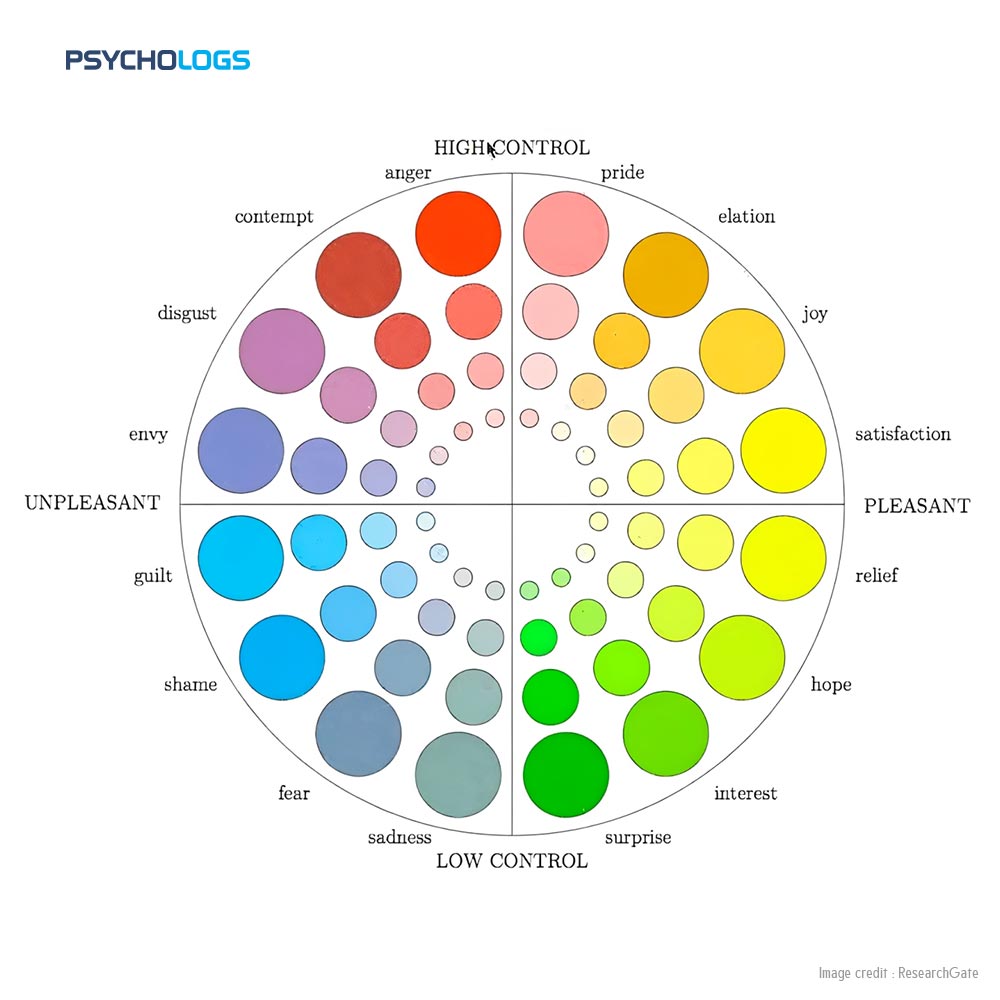
The Geneva Wheel of Emotion is a theoretical framework and a self-report tool that was developed by the Geneva Emotion Research Group at the University of Geneva. The Geneva Wheel of Emotion is a four-quadrant model explaining the emotions in four categories. The first category involves unpleasant high control, unpleasant low control, pleasant high control, and pleasant low control. Which emotions does each of these quadrants consist of?
- Unpleasant, High Control: Envy, Disgust, Contempt, Anger.
- Unpleasant, Low Control: Guilt, Shame, Fear, Sadness.
- Pleasant, High Control: Satisfaction, Joy, Elation, Pride.
- Pleasant, Low Control: Relief, Hope, Interest, Surprise.
It essentially explains whether the emotion is pleasant or unpleasant and the level of power or control an individual feels when they experience it. The Geneva Wheel of Emotion arranges 20 distinct emotion families across a circular grid, which are defined by two psychological dimensions:
- Valence: Valence is the horizontal axis, which ranges from unpleasant(Left) to Pleasant (Right).
- Control/Power: Control or Power is the Vertical axis, ranging from High Control to Low Control (Sachrin et al.,2012).
Conclusion
The Wheel of Emotions developed by Robert Plutchik in 1980 is still extensively studied and discussed in the field of psychology and UI/UX design. This model explains the complexity of human emotions understandably. His wheel of emotion has theoretical underpinnings in the Psychoevolutionary Theory of Emotions. The alternative wheel of emotion is known as the Geneva Wheel of Emotions. Defining emotions has been one of the complex tasks for both ancient and contemporary psychologists. Amidst the complexities of understanding emotions, eminent psychologist Robert Plutchik bestowed the field with the Wheel of Emotions.
References +
- American Psychological Association. (2018). Emotion. In APA dictionary of psychology. Retrieved August 9, 2026, from https://dictionary.apa.org/emotion
- Imbir, K.K. (2020). Psychoevolutionary Theory of Emotion (Plutchik). In: Zeigler-Hill, V., Shackelford, T.K. (eds.) Encyclopedia of Personality and Individual Differences. Springer, Cham. https://doi.org/10.1007/978-3-319-24612-3_547
- Buck, Ross & Oatley, Keith. (2007). Robert Plutchik (1927–2006). American Psychologist. 62. 142-142. 10.1037/0003-066X.62.2.142. https://doi.org/10.1037/0003-066X.62.2.142?urlappend=%3Futm_source%3Dresearchgate.net%26utm_medium%3Darticle
- Sacharin, V., Schlegel, K., & Scherer, K. R. (2012). Geneva emotion wheel rating study. Centre for Person, Kommunikation, Aalborg University, NCCR Affective Sciences. Aalborg University, Aalborg, 1, 695-729.
- Cherry, K. (2022, September 12). Emotion wheel: What it is and how to use it. Verywell Mind. https://www.verywellmind.com/what-is-an-emotion-wheel-6500040
- Winter, T. (2019, August 30). In a nutshell: Wheel of emotions. Human Performance Technology by DTS. https://blog.hptbydts.com/in-a-nutshell-wheel-of-emotions
- Ekman, P. (1970). Universal facial expressions of emotions. California Mental Health Research Digest, 8(4), 151–158.
- Bänziger, T., Tran, V., & Scherer, K. R. (2005). The Emotion Wheel. A Tool for the Verbal Report of Emotional Reactions. Poster presented at the conference of the International Society of Research on Emotion, ISRE 2005, Bari, Italy
- Plutchik, R. (1980). A general psychoevolutionary theory of emotion. In R. Plutchik & H. Kellerman (Eds.), Emotion: Theory, research, and experience: Vol. 1. Theories of emotion (pp. 3–33). Academic Press. https://doi.org/10.1016/B978-0-12-558701-3.50007-7
1 Comment