

Existential therapy is philosophically rooted. At some point in life, humans ask questions that are concerned with their existence. Questions such as: Who am I? Where do I come from? What is the purpose of my life? etc. Existential Therapy revolves around exploring the questions of existence and finding answers to them. Life, Death, Isolation, Loneliness, Joy, Pride are known as Existential themes which client and therapist focus on.
There is no set standard manual on how to be an existential practitioner; rather, therapists incorporate this approach in order to explore the dark and hidden sides of human life. Clients are often reluctant to open up about existential themes in the therapy hence when a therapist adopts existential approach it can help them to navigate clients. Existentialism and humanism do share similarities with each other while determining human nature.
Existential therapy helps to uncover the distress that is caused by existential themes. The four core concerns that are focused on in existential therapy are: Freedom, Isolation, Meaninglessness, Death. The father of existential therapy is Søren Kierkegaard, a 19th-century philosopher who emphasised giving meaning to one’s own life rather than searching for that meaning in external factors(Fielding, 2026; Centre for Substance Abuse Treatment, 1999 ).
Premise of Existential Therapy
The existential approach explains the basic propositions to understand the human being. There are six premises which help to determine the conflicts of existence; they are as follows:
1. A Sense of Self – Awareness
The bases of self-awareness are freedom, responsibility and choice. The possibilities for freedom arise only when there is self-awareness. The existential approach emphasises the idea that an individual can fully grow when they develop an awareness of the following aspects: An individual is finite and does not have a lot of time to do what they want to do; individuals are free to make a decision and take action; individuals can create their own destiny; meaning simply refers to an understanding of how individuals are thrown into the world; individuals will feel lonely, guilty, empty; humans are alone, yet there are opportunities to relate to others. Humans can choose either to expand their consciousness or restrict it because being self-aware is a pathway to most other human capacity.
2. Freedom and Responsibility
One of the important themes is that humans are free to choose among options and are responsible for shaping their own destiny. The existential approach also advocates that human beings cannot determine the circumstances in which they are born but can make choices that can change their life. One of the central and contradictory concepts also explains that although humans long for freedom, they often escape from it by defining themselves as fixed or static. Inauthenticity refers to not accepting one’s personal responsibility. Freedom simply refers to one’s responsibility for actions, choices and failure to take action.
When individuals cannot make the choice which they would have made they experience existential guilt. It grows out of the realisation that humans are not able to become what they were supposed to. On the other hand, authenticity refers to living true to oneself, and it is the courage to be who humans are. For existentialists, freedom and responsibility go hand in hand.
3. One’s Identity and Relationship with Others
People have a tendency to preserve their own identity and uniqueness, yet they also desire to create relationships with others. Creating an identity takes courage. One of the barriers to creating one’s identity is that people behave in a way that is largely accepted by society. They believe in others’ values, beliefs, and morals rather than believing their own. Individuals then live by the identity which is created by others.
Courage refers to the process of moving forward in spite of anxiety-producing situations. Individuals struggle to create identity and find a deep core of self. Loneliness is one of the aspects that is inevitable in life. It comes when individuals finally realise that there are decisions which they need to make alone. In spite of these experiences, humans want to relate with others and want to feel important in others’ lives.
4. The Quest for Meaning
Humans do search for meaning and purpose. Individuals seek to understand existential questions such as: Why am I here? What gives my life a purpose? etc. The quest and search for meaning are integral themes of existentialism. Frankl explained that discovering meaning is central because it provides direction to human life. The experience of meaninglessness is termed existential neurosis. This leads to existential vacuum which refers to the emptiness which is followed by meaninglessness. Meaning is central to human life, but it is difficult to determine meaning in life. Clients do experience worry about it.
5. The Experience of Anxiety
Existentialists view anxiety as an inevitable condition of life. It arises from one’s personal striving to maintain one’s life. Existential Anxiety is dealing with the givens of existence: death, freedom, choice, isolation, and meaninglessness. It arises when individuals need to face the realisation of mortality, pain and suffering, struggle for survival, etc. Importantly, existential anxiety is also experienced when individuals need to take the responsibility of actions.
Existentialism also differentiates between normal anxiety and neurotic anxiety. Normal anxiety refers to the relevant response elicited when faced with the existential givens of life. This anxiety should not be repressed and should be expressed well. What results in neurotic anxiety is the inability to move ahead from anxiety. It is mostly out of awareness and immobilises an individual.
6. Awareness of Mortality
Existentialists do not hold a negative view about death; rather, they emphasise that awareness about death adds significance and meaning to one’s life. It is important to think about death if life has been given thought. Death should not be feared; rather, it helps individuals to accept and appreciate the present. Instead of being frozen by death, individuals should reflect on life(Corey, 2017).
Existential and Humanism
According to Price (2011), Existential Humanist psychology both emphasise human choices, decisions, autonomy, purpose, and meaning. Humanistic approach advocates that individuals have an urge of self actualization( the tendency to reach their full potential ). Existentialism and Humanism both emphasise genuine encounter rather than working on techniques.
Although they might be similar, both differ in their philosophical grounding. The existentialists focus on the reality of life, and their writing focuses on the existential givens of life: death, meaninglessness, loneliness, etc. The humanists, on the other hand, take a more optimistic view towards life, i.e., self-actualisation. Existential and Humanistic psychologists foster the notion of therapy that it not only changes minds but also lives.
Types of Existential Therapy
There are several types and techniques which are used by practitioners who adopt while taking an existential approach. Below are some of them and a detailed discussion of Viktor Frankl’s Logotherapy.
1. Dasein Analysis
This type prominently focuses on helping people recognise their free will and self-determination. It was founded by Swiss psychiatrist Medard Boss and heavily influenced by the philosophy of Martin Heidegger. Dasein analysis views human existence as open, relational beings who are fundamental to their own world. The therapist, rather than viewing the symptoms as internal pathology, views the person’s experiences and relates them to the internal world, time, space and choices. The primary goal is to help clients clear away emotional blockages, which can help them to open up, become authentic and take responsibility for life(Kashyap, 2026).
2. Viktor Frankl and Logotherapy
Logotherapy is a therapeutic approach with an aim of helping a client discover purpose and meaning in life. Logos is a Greek term that refers to meaning and to overcoming the feelings of emptiness and despair. Logotherapy was developed by a Viennese psychiatrist, Viktor Frankl, in 1929. It continues to flourish today across various therapeutic settings.
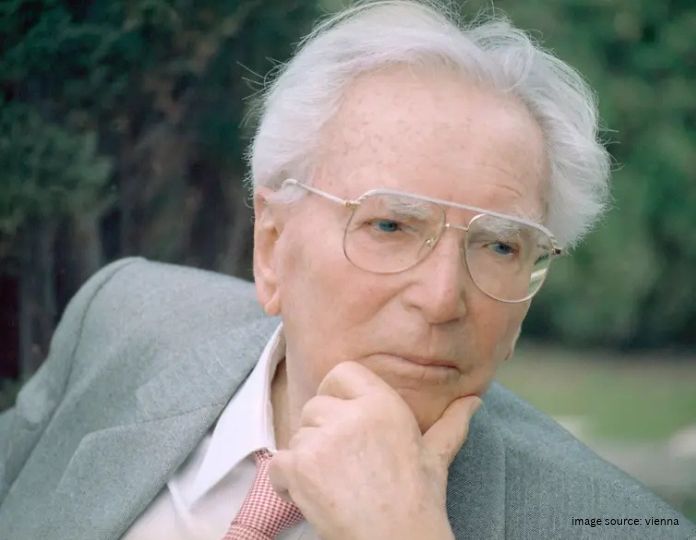
Frankl’s Logotherapy was influenced by many factors and forces, the first and most prominent of which were Freud’s psychoanalysis and Adler’s Individual Psychology; even World War II also influenced Frankl’s Logotherapy. Frankl advocated that each human being has an unconscious knowledge about the meanings lying in their situations; hence, the therapist acts as a midwife who helps to uncover this deeply held knowledge.
Logotherapists ask their clients and help them understand that every life situation has a meaning associated with it. Logotherapists also ask their clients to act out or paint their parts. Fast-forwarding, where the client is asked to imagine the scenario that might happen. Miracle Questions help clients develop a deeper life insight and help them understand what they truly want in life.
Example of Miracle questions: “If you were free to do whatever you want and money is not an issue, what would you like to do daily right now?’’ “If God grants you any three wishes, what would be your top three wishes?” Frankl writes that Logotherapy is not a substitute for psychotherapy; rather, it is a supplement to it(Cooper, 2003).
The Therapeutic Process
The therapeutic process is collaborative and respectful. The client and therapist both participate and work on goals. However, the client’s experience in therapy is somewhat threatening because they have to face the existential givens of life, explore them, and confront them. Clients might also feel reluctant to talk and share about death and loneliness. The role of the therapist is to help and facilitate the client in understanding themselves.
The therapist helps the client by asking miracle and open questions, which will allow the client to reflect on themselves. The process might also seem somewhat intensive and lengthy. Mutual trust, collaboration, empathy, respect and acceptance are the key foundation of the client – therapist relationship. The therapist should be skilled and capable of adopting this approach in practice because it also becomes equally important to bring the goals to a closure rather than leaving the client stranded in the middle of existence.
When incorporated with a person-centred approach, existentialism elicits the best therapeutic outcome(Corey, 2017). Some of the key techniques used in existential therapy are: Open and interactive dialogue, mindfulness, questioning, respecting experiences, avoiding labels, creativity and exploration, embracing change (Kashyap,2026).
Case Snippet
Analyse the case below by applying an existential approach. As a counsellor, which premise do you notice that underlies Alice’s problems? As a counsellor, how would you use an eclectic approach to help your client deal with the problem? Alice is a 40-year-old female who has come to the therapist to seek counselling for her daily life stressors. Her daily life stressors include: humiliation by her manager at her workplace, being unable to wake up early in the morning, lately sleeping less than usual, and lately she was diagnosed with a thyroid condition.
She lacks personal resources such as a supportive partners; friends don’t understand her, and her workplace is toxic. She states that lately she has been feeling empty and hollow; she feels that she lacks purpose in her life. Also, she reports that she thinks a lot about death and feels gloomy when she gets engrossed in it. She states that she feels lonely and wants genuine connections around her.
Conclusion
Existential therapy refers to the exploration of existential givens of life. A therapist can incorporate an existential approach in their practice to help and facilitate their client to become more self-aware about their circumstances. This approach can help clients to become experts of their own life by overcoming normal anxiety. In contemporary times, an existential approach is incorporated by many practitioners in the field. Several types and techniques are used. Existentialism and humanism do share some similarities, but they are also somewhat different approaches
References +
- Centre for Substance Abuse Treatment. Brief Interventions and Brief Therapies for Substance Abuse. Rockville (MD): Substance Abuse and Mental Health Services Administration (US); 1999. (Treatment Improvement Protocol (TIP) Series, No. 34.) Chapter 6 –Brief Humanistic and Existential Therapies. Available from: https://www.ncbi.nlm.nih.gov/books/NBK64939/
- Price, M. (2011, November 1). Searching for meaning. Monitor on Psychology, 42(10). https://www.apa.org/monitor/2011/11/meaning
- Cooper, M. (2003). Existential therapies. Sage.https://books.google.co.in/books?hl=en&lr=&id=NkxQ2xyK1koC&oi=fnd&pg=PP11&dq=existential+therapy&ots=pxJBcA9ShI&sig=V3pJOAPXb9pRilzk7Dsd-nem0H4&redir_esc=y#v=onepage&q=existential%20therapy&f=false
- Fielding, S. (2026, October 20). How existential therapy works. Verywell Mind. https://www.verywellmind.com/how-existential-therapy-works-7971798
- 2. Kashyap, N. (2026, June 2). Existential theory. Verywell Health. https://www.verywellhealth.com/existential-theory-5272172
- Corey, G. (2017). Theory and practice of counselling and psychotherapy (10th ed.). Cengage Learning. https://www.ijp.org.uk/docs/Theory_and_Practice_of_Counseling_and_Ps.pdf