

The word Yoga is derived from the Sanskrit word Yuj, which means ‘to join’ or ‘to unite’. According to the Vedic scriptures, practising yoga unites an individual with universal consciousness, mind, body, and nature. Sadhana originated in the Indian Subcontinent thousands of years ago. The history of yogic practice is divided into four essential periods; they are as follows
- The Vedic Period (1500 BC to 500 BC ): The very earliest mention of Sadhana can be found in the Rigveda. Rigveda is one of the scriptures among the four Vedas. Rigveda consists of a collection of hymns and chants that were used by Vedic priests. These hymns preach the practice of yoga as a means to achieve spiritual enlightenment.
- The Pre-Classical Period (500 BC to 200 BC ): During this pre-classical period, the Upanishads were written. The Upanishads explain the other essential texts of Hinduism. Upanishads explain Yogic practice as a means to achieve spiritual liberation by controlling the mind and senses.
- The Classical Period (200 BC to 500 AD ): During this period, Patanjali wrote the Sadhana Sutras. The Yoga Sutras consisted of 196 aphorisms. Aphorisms are short phrases that explain the idea. In the Yoga Sutras, the 196 aphorisms describe the eight limbs of yoga. The limbs include Yama (moral codes),niyama (Self – Purification), Asana (Postures), Pranayama (Breath Control), pratyahara (sense withdrawal), dharana (concentration), dhyana (meditation), and samadhi (enlightenment).
- The Post Classical Period (500 AD to Present Times): This period saw the emergence of various Schools of Yoga with their unique approach. Some of the most well – known schools of Yoga are Hatha Yoga, Kundalini Yoga, and Ashtanga Yoga(Yoga Escapes n.d., Ministry of Ayush, Government of India, n.d.).
Patanjali’s Contribution
Patanjali, also known as “The Father of Yoga”, was an Indian Sage. Sadhana actually emerged out of oral tradition. The knowledge of Yoga was passed down from teacher to student. Patanjali collated this tradition in his 2000 Years old treatise, the Yoga Sutras(Garfinkel,2005).In his Yoga Sutras, yoga is defined as “chitta vritti nirodhah” (chapter 1, verse 2), which means to restrain the mind from taking various forms.
Though the already existing texts mentioned yoga, Patanjali compiled all of them in one book, which made yogic practice easy to understand. Apart from being the author of The Yoga Sutra, he also wrote Carakavarttika during the 10th Century, which is a commentary on the Charaka Samhita, a large treatise on Ayurveda(Alam et al.,2024). Here are the eight limbs of Patanjali’s process of yoga, or what is popularly regarded as Ashtanga yoga :
- Yama: Restraining from unethical actions.
- Niyama: Observance of Positive Actions.
These two limbs help to control the lower instincts of one’s nature and help to build a good character.
- Asana: Physical Postures
- Pranayama: Breath Control
- Pratyahara: Sense Withdrawal
These three limbs explain how to enable control over body, breath and senses.
- Dharana: Concentration
- Dhyana: Meditation
These final limbs help to control the mind. When a yogi reaches these stages, it leads to samadhi, which is union with the divine(Allard, 2020).
Research Study on the Perception of Ashtanga Yoga
A research study was conducted to understand the perception and practice of the eight limbs of yoga among yoga teachers. Researchers made use of a self – designed questionnaire containing 28 items. A total of 37 yoga teachers participated in this study. The majority of participants, 80%, reported that all eight limbs are essential. However, there were varied statistics on the eight limbs.
The most emphasis was placed on pranayama (91.9% ) and asana (89.2%). On the other hand, niyama (75.7%), yama (73%), pratyahara (70.3%), dhyana (70.3%), and dharana (64.9%) were given less emphasis. This study concluded that those who practice yoga should lay equal emphasis on all the limbs of Yogic practice while teaching it to the new population. Health professionals should possess a holistic and comprehensive understanding of yoga so as to promote it and avoid causing harm to new practitioners(Alam et al.,2024).
Chakras of Kundalini
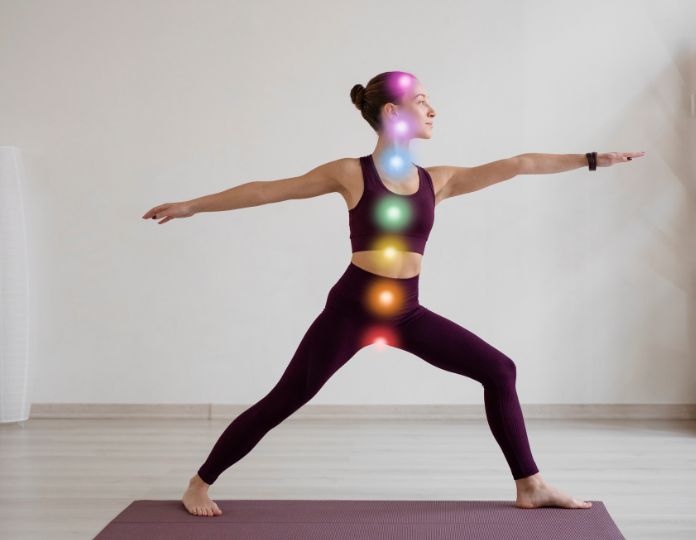
Chakras refer to seven points along your spine which are believed to be associated with certain physical, emotional and spiritual functions. When all these seven chakras are activated one after the other, a dormant energy that is coiled gets activated in the body, known as Kundalini. Chakra, in literal terms, means Wheels. Before understanding the seven chakras, it is important to know about the Kundalini Energy.
This energy rests at the base of the spine. Yogis in ancient times described it as a coiled serpent. It does not mean a snake, but the energy is wound in such a way. When the practice of yoga, control of breath and conscious awareness align, kundalini energy is activated. The term kundalini has originated from the Sanskrit word Kundal, which means coiled or spiral form. The ini suffix indicates the feminine energy.

The Seven Chakras
- Muladhara Chakra: The location of the Muladhara chakra is at the base of the spine; the element of this chakra is earth, and the function of Muladhara is grounding and stability.
- Svadhisthana: It is located at the lower abdomen; the element of this chakra is water, and it plays a role in emotions and sexuality.
- Manipura: It is located at the upper abdomen, and the element of this chakra is fire. By activating this chakra, one can activate personal power, will, and confidence.
- Anahata: It is located at the centre of the chest, and the element of this chakra is air. It boosts compassion and love.
- Vishuddha: It is located in the throat, and the element of this chakra is ether/space. By activating this chakra, one becomes truthful and gets better at expressing.
- Ajna: Ajna is located between the eyebrows, and the element of this chakra is light. The primary function of this chakra is intuition and insight.
- Sahasrara: This chakra is also known as the crown chakra, as it is located in the head, and the element of this chakra is consciousness. It finally unites a being with the divine(Adhiroha Yoga Ashram, 2026).
The kundalini energy activates from bottom to top. Each chakra gets purified in sequence.
Are There Any Side Effects of Rising Kundalini Energy?
As the kundalini energy rises, the individual might have to face certain consequences. Consequences are present because the kundalini is an energy, and any kind of energy has both positive and negative effects. Consequences such as death, pseudo death, psychosis, pseudo psychosis, confusion, anxiety, panic attacks, depression, sadness, suicidal thoughts, homicidal urges, irregular heartbeat, insomnia, inability to hold a job, talk, sexual pains, etc (Kumar,2007).
The Relationships Between Yoga and Chakra
According to Chopra (2024), when chakras are balanced and are functioning optimally, an individual experiences overall well – being. Whereas, if there is any blockage of energy in the chakra, it can lead to severe health issues. Yogic practice allows energy to flow freely and maintain a state of balance. Asanas and meditation help in cleansing the chakra. For example, the Muladhara Chakra can be cleansed by practising Tadasana (Mountain Pose) or Virabhadrasana (Warrior Pose). The Svadhisthana chakra can be activated by practising the Baddha Konasana (Butterfly Pose) and Eka Pada Rajakapotasana (Pigeon Pose). According to Anusha (2024), there are several ways to activate a chakra, and they are as follows:
- Meditation: It helps to calm thoughts and allows individuals to focus on each chakra personally.
- Pranayama: When individuals breathe deeply, it allows energy to flow efficiently.
- Yoga: As discussed above, yoga asanas, which are specific to each chakra, should be practised regularly.
- Affirmations: Individuals should repeat positive affirmations more often in order to align with the energy.
- Sound Therapy: Sound therapy assists in the stability of chakras.
Yoga Therapy
Like other types of therapy, yoga therapy focuses on the integration of mind and body to enhance mental health. It takes place with a trained therapist in a one-on-one mode. This form of therapy brings yogic principles of posture and breathing to improve mental well-being. Group Yoga therapy is a subpart of yoga therapy where a small group works with the therapist.
Yoga Therapy can be helpful as a treatment modality in mental conditions such as: Alcohol Dependence, Anxiety and Panic Disorders, ADHD, Autism, Bipolar, Depression, Eating Disorders, Schizophrenia, Phobia, PTSD, Stress. One of the most beneficial aspects of Yoga Therapy is that it does not have any side effects. If yoga is practised with the right posture and with caution, it actually yields beneficial results in the long term(Gupta,2026).
Fascinating Facts About Yoga
- There are 84 classic yoga asanas.
- Swami Vivekananda is credited with taking yoga to the West.
- According to Hinduism, Shiva is considered the supreme lord of yogic practice.
- B K S Iyengar was the most prominent teacher of modern yogic practice in the world.
- Studies have suggested that yoga improves social and occupational functioning in schizophrenic patients (The Better India,2015).
- It has been estimated that 11.8% of the Indian population practices yoga in urban and rural areas(Alam,2024).
Conclusion
Yoga is an age- old practice. Civilisations for a long time have preserved it via oral tradition and written tradition. Essentially, yogic practice is still preserved in modern times because it is practised all over the world. Chakras are activated by practising yoga and dhyana. Though chakras have still not gained recognition in other parts of the world, scriptures suggest that activating them can be life-changing, but it should be done under supervision. In the modern world, yogic practice has made its place in treatment modalities for psychological disorders. Every day, dedicating some amount of time to practising yoga can be life-changing.
References +
- Yoga Escapes. (n.d.). A brief history of yoga. https://www.yoga-escapes.com/a-brief-history-of-yoga/
- Ministry of Ayush, Government of India. (n.d.). History. Yoga Certification Board. https://yoga.ayush.gov.in/yap/history
- Adhiroha Yoga Ashram. (2026). What is kundalini? Energy, chakras & meaning explained simply. https://www.adhiroha.com/blog/what-is-kundalini-energy-chakras-philosophy-explained
- Alam, K. K., Gangwani, N., & Mohan, M. (2024). Perception and practice of the eight limbs of yoga in yoga teachers: A cross-sectional descriptive study. Journal of family medicine and primary care, 13(4), 1500–1506. https://doi.org/10.4103/jfmpc.jfmpc_1711_23
- Kumar, K. (2007). Awakening of Kundalini through Yoga. Nature & Wealth, 6(3)
- Garfinkel, M., & Schumacher, H. R., Jr. (2000). Yoga. Rheumatic Disease Clinics of North America, 26(1), 125–132. https://doi.org/10.1016/S0889-857X(05)70126-5 .
- Allard, S. (2020, September 23). Who was Patanjali and what are the Yoga Sutras? Hindu American Foundation. https://www.hinduamerican.org/blog/who-was-patanjali-and-what-are-the-yoga-sutras
- TBI Team. (2015, June 20). 14 interesting facts about yoga to know on the first International Day of Yoga. The Better India. https://thebetterindia.com/26304/interesting-facts-about-yoga-you-should-know-on-first-international-yoga-day
- Gupta, S. (2021, August 26). What is yoga therapy? Definition, types, techniques, and efficacy. Verywell well. https://www.verywellmind.com/yoga-therapy-definition-types-techniques-and-efficacy-5198742
- Anusha, K. (2024). The Integral Role of the Seven Chakras and Their Activation Mechanisms in Human Energy Dynamics. The International Journal.
- Chopra, A. (2024, April 12). Yoga and chakras: Understanding the energetic connection. Yogamasti. https://yogamasti.co.uk/blogs/news/yoga-and-chakras-understanding-the-energetic-connection