
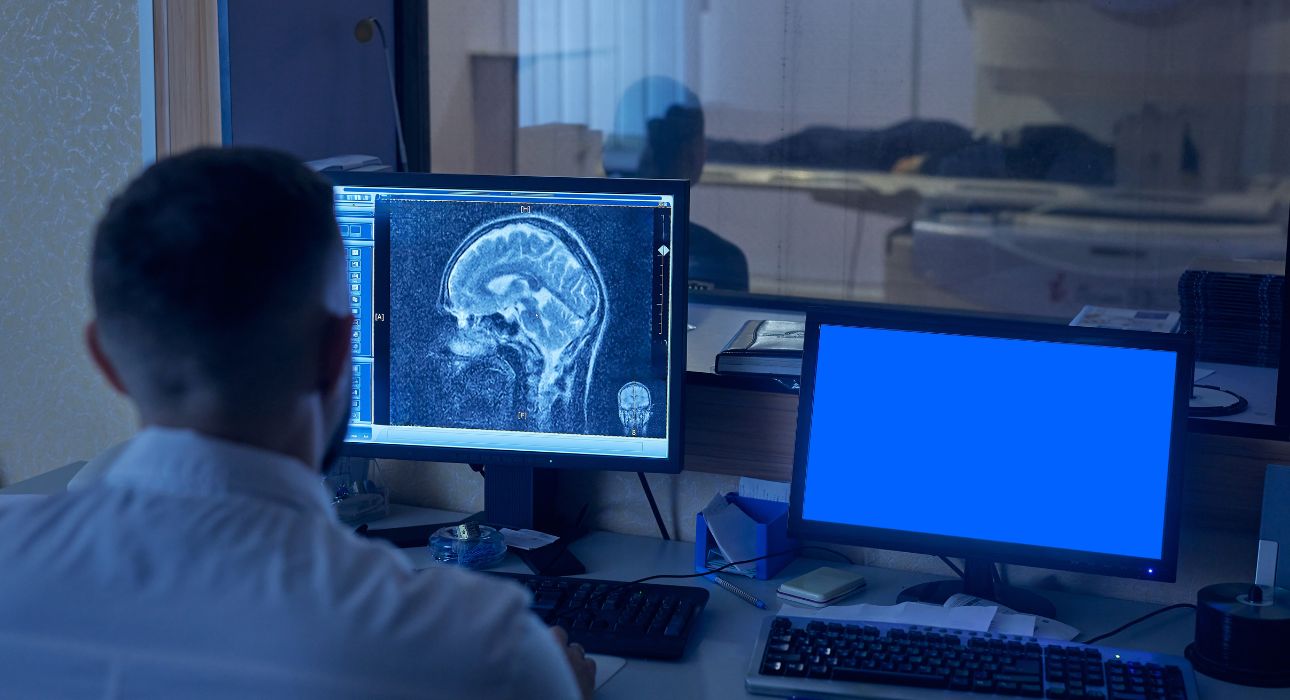
Neuromyelitis Optica Spectrum Disorder (NMOSD) is a rare autoimmune disease that affects the central nervous system. It mainly impacts the optic nerves, the brainstem and the spinal cord. The condition was called Devic’s disease or neuromyelitis optica. The first name was given because of Dr Eugene Devic, who first described the disease after observing it in a patient in 1894. He observed a patient with optic neuritis and neuromuscular issues. Optic neuritis is inflammation of the optic nerve. It causes pain, blurred vision, vision loss and trouble seeing in low light. It can affect both eyes or one at a time (Shumway et al., 2024; Neuromyelitis Optica (NMO), n.d.).
Read More: Psychoneuroimmunology: Understanding the Brain-Immune-Behaviour Connection
What Does NMOSD Affect? Underlying Mechanisms
Neuromyelitis Optica Spectrum Disorder affects the central nervous system (CNS). The brain and spinal cord, which make up the CNS, have neurons. The nerves that branch outward to other parts of the body are the peripheral nervous system. Each of the nerves or neurons has an axon, which carries the electrical signals to the next part of the neuron. The axons have a protective coating called myelin. Myelin helps conduct the electrical signals and protects the axon from damage. NMOSD is a demyelinating disease. This means that the disorder causes damage to the myelin covering, which damages the axon (Shumway et al., 2024; Neuromyelitis Optica (NMO), n.d.).
In 60% to 90% of patients with Neuromyelitis Optica Spectrum Disorder, IgG antibodies have been found attacking aquaporin-4. Antibodies are protective proteins that the immune system makes to help fight foreign substances like viruses and bacteria. IgG, or immunoglobulin G, is the main type of antibody found in the blood. This antibody mistakenly attacks Aquaporin-4, which is a water channel at the foot of astrocytes (helper cells in the brain and spinal cord).
Astrocytes are highly concentrated in certain parts of the central nervous system, like the optic nerve, spinal cord, and the area postrema in the brainstem. Therefore, it makes sense that the most affected areas are these (Shumway et al., 2024; Antibody, n.d.; Neuromyelitis Optica (NMO), n.d.; Professional, 2025; Mader & Brimberg, 2019; Wei & Morrison, 2023; Foy & Foy, 2009).
Multiple Sclerosis (MS) was the most prevalent autoimmune disorder with optic neuritis for many years. As a result, Neuromyelitis Optica Spectrum Disorder was thought of as a variant of MS, but recent studies found the difference. A specific antibody was identified in patients. Therefore, NMOSD includes optic neuritis, spinal cord issues and neurological disorders that are associated with the aquaporin-4 IgG and MOG antibodies (AQP-4IgG) (Shumway et al., 2024; Neuromyelitis Optica (NMO), n.d.).
At a cellular or tissue level, this disorder would include activation of microglia, which are immune cells in the brain and spinal cord that maintain neuronal networks and repair injury. There would also be axonal damage and infiltration of eosinophilic cells, which are a type of white blood cells. There would also be a deposition of antibodies around the blood vessels. Finally, local activation of the complement system, which is a group of proteins that help the immune system fight infection (Colonna & Butovsky, 2017; Sarma & Ward, 2011; Shumway et al., 2024).
Read More: Neurodevelopmental Disorders in Children
What are the Symptoms of it?
Neuromyelitis Optica Spectrum Disorder causes attacks where the symptoms flare up from time to time. The attacks can be severe and cause lasting damage. The symptoms can be in the form of optic neuritis. This is where the optic nerve, which sends signals between the brain and eyes, swells. This puts pressure on the optic nerve and can cause eye pain, blurred vision, partial vision loss or blindness and trouble seeing in low light (Shumway et al., 2024; Neuromyelitis Optica (NMO), n.d.).
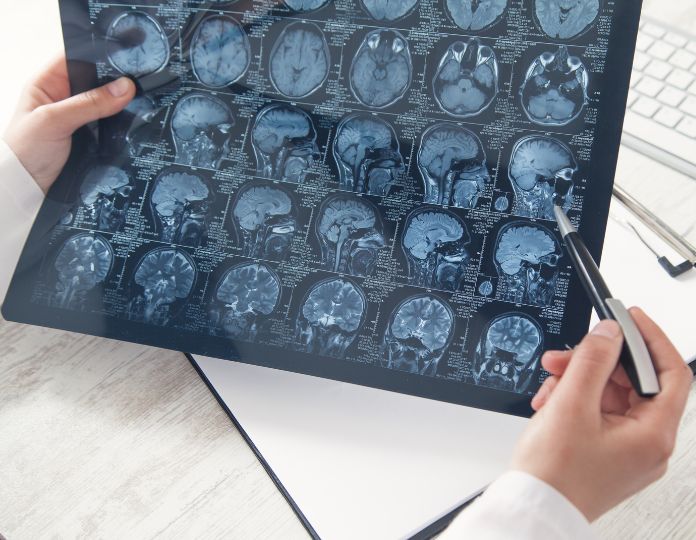
It can also cause myelitis. This is swelling in the spinal cord. This puts pressure on the nearby nerves and can partially or completely block nerve signals in the affected area. When there is disruption to all nerve signals, it is called transverse myelitis. The symptoms of myelitis depend on where the inflammation is. It can cause muscle weakness or paralysis in the body parts below the affected spinal nerves.
Spasticity can also occur. This is a loss of control over the muscles, and things like twitching can be seen. Pain can also occur, directly due to the swelling or due to incorrect signals from the disrupted nerve signals. Loss of control over bladder and bowel movements can also occur, with sexual dysfunction (Shumway et al., 2024; Neuromyelitis Optica (NMO), n.d.).
It is less likely for Neuromyelitis Optica Spectrum Disorder to cause changes in the brain, but when it happens, it can disrupt certain processes in the body. If the affected areas are in the hypothalamus or the brainstem, it can be extremely dangerous. Both handle the automatic processes of the body, such as blood pressure and breathing. Any impact in these areas can cause hiccups, itching, vomiting, hearing loss, double vision or problems with eye movements, facial paralysis, dizziness, issues with balancing, nerve pain in the face and more. Other body systems can also end up getting affected. NMOSD is a relapsing condition with the disorder worsening over years or decades (Neuromyelitis Optica (NMO), n.d.).
Causes and Risk Factors
So far, the only explanation for NMOSD is immune malfunction or other autoimmune conditions. The presence of Aquaporin-4 (AQP4) antibodies and Myelin oligodendrocyte glycoprotein (MOG) antibodies indicates the immune issues in this disorder. MOG is a protein that helps form and maintain the myelin coating. MOG antibodies are present in 6.5% of people with NMOSD. 13.5% of the patients show neither AQP4 nor MOG antibodies.
The reason for NMOSD in them is not yet clear. Some studies have found the presence of some infection in 15% to 35% of people before NMOSD symptoms appear. Post-vaccination symptoms have also been observed. However, further research is necessary to confirm or establish any relationship. Although NMOSD can happen on its own, it is more likely to occur alongside other autoimmune disorders like lupus or celiac disease (Shumway et al., 2024; Neuromyelitis Optica (NMO), n.d.).
It is suggested that genetics do play a role. Some at-risk genotypes have been identified for NMOSD. The disorder is only prevalent in 0.3 to 4.4 people per 100,000 people. It occurs mainly in females, with 80% of patients being females and the major age group being 30s to 50s. Paediatric cases do account for 5%, however. Ethnicity also seems to play a role. In Cuba, patients of African heritage were older and had more relapses than patients of other ethnicities.
So far, no evidence shows that the disorder can be contagious. A 2025 systematic review identified Vitamin D deficiency, cigarette smoking, a diet with lower protein and fat and higher carbohydrate intake and Mycobacterium avium subspecies paratuberculosis infection as possible environmental risk factors (Shumway et al., 2024; Neuromyelitis Optica (NMO), n.d.; Mohammadi Lapevandani et al., 2025).
Read More: Epigenetics and Psychological Disorders: Mechanisms, Diagnosis, and Treatment Implications
Diagnostic Procedures
Diagnosis involves blood tests, MRI, and physical and neurological evaluation. The presence of AQP4-IgG and MOG antibodies is tested with blood tests, as they are still useful in a majority of cases. MRI scans are used to identify changes in the brain and spinal cord that are NMOSD-related. Physical and neurological tests look for problems in muscle movements, reflexes, senses, and facial movements.
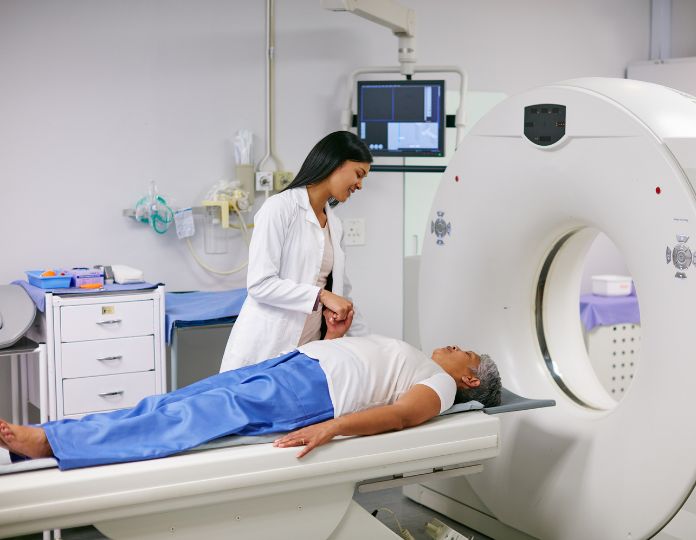
MRI scans can detect problems such as optic neuritis and specific lesions. Other tests can identify vision loss, reduced colour vision, pupil abnormalities, and changes in intraocular pressure. The core characteristics identified in NMOSD are optic neuritis, acute myelitis, unexplained hiccups, nausea, or vomiting, which affect the area postrema, brainstem syndrome involving dizziness, vertigo and balance problems, and symptomatic narcolepsy involving excessive sleep (Shumway et al., 2024; Neuromyelitis Optica (NMO), n.d.; David, 2026; Narcolepsy, 2026).
Treatment approaches
NMOSD is not curable, but treatment is possible. Treatment can be acute, which focuses on the immediate attack and inflammation, or it can be long-term management, which can suppress the immune system. During the acute stage, doctors may prescribe steroids and anti-inflammatory drugs. Plasma exchange may also help remove harmful antibodies from the blood. Another treatment option is intravenous immunoglobulin (IVIG), which involves administering antibodies collected from donated plasma.
The donor plasma will not attack the body as the patient’s immune system would. Doctors may also prescribe immunosuppressants. Overall, these work to reduce the strength of the immune system so that the attacks will do less damage. This can lead someone to be vulnerable to other viruses or bacteria (Shumway et al., 2024; Neuromyelitis Optica (NMO), n.d.).
Conclusion
Neuromyelitis Optica Spectrum Disorder (NMOSD) is a rare disorder impacting the central nervous system. The immune system mistakenly attacks parts of the nervous system and affects mainly the eyes, spinal cord and brainstem. The attacks can cause permanent damage. It can cause inflammation in the optic nerve, eye pain, blurred vision, partial vision loss or blindness, muscle weakness, pain, muscle spasms, uncontrolled hiccups, itching, vomiting, double vision, dizziness, balance problems and more. Immune system malfunctions and genetics might play a role in causing the disorder.
Environmental variables like vitamin D deficiency, cigarette smoking, diet and past infection might also play a role. The disease is prevalent in females and in the age group of 30s to 50s. Diagnosis involves blood tests, MRIs, and physical and neurological tests. The disorder is not fully curable, but long-term treatment to manage and weaken the immune system can help during attacks. Acute treatment during attacks can involve steroids or anti-inflammatory medicine. Long-term treatment can include plasma exchange, immunosuppressants, etc. NMOSD is manageable, and taking medications and taking precautions for other diseases can help with a good quality of life.
References +
- Antibody. (n.d.). Genome.gov. https://www.genome.gov/genetics-glossary/Antibody
- Professional, C. C. M. (2025, June 18). Immunoglobulin G (IGG). Cleveland Clinic. https://my.clevelandclinic.org/health/body/igg
- Wei, D.C., & Morrison, E.H.(2023). Histology, Astrocytes. StatPearls [Internet]. Treasure Island (FL): StatPearls Publishing. https://www.ncbi.nlm.nih.gov/books/NBK545142/
- Mader, S., & Brimberg, L. (2019). Aquaporin-4 Water Channel in the Brain and Its Implication for Health and Disease. Cells, 8(2), 90. https://doi.org/10.3390/cells8020090
- Shumway, C.L., Patel, B.C., Tripathy, K., & De Jesus, O. (2024). Neuromyelitis Optica Spectrum Disorder (NMOSD). StatPearls [Internet]. Treasure Island (FL): StatPearls Publishing. https://www.ncbi.nlm.nih.gov/books/NBK572108/
- Neuromyelitis Optica (NMO). (n.d.). Cleveland Clinic. https://my.clevelandclinic.org/health/diseases/9858-neuromyelitis-optica-nmo#diagnosis-and-tests
- Foy, M.R. & Foy, J.G. .(2009). Conditioned Taste Aversion.Encyclopedia of Neuroscience. Academic Press. ISBN 9780080450469. https://doi.org/10.1016/B978-008045046-9.00112-1.
- Colonna, M., & Butovsky, O. (2017). Microglia Function in the Central Nervous System During Health and Neurodegeneration. Annual review of immunology, 35, 441–468. https://doi.org/10.1146/annurev-immunol-051116-052358
- Sarma, J. V., & Ward, P. A. (2011). The complement system. Cell and Tissue Research, 343(1), 227–235. https://doi.org/10.1007/s00441-010-1034-0
- Mohammadi Lapevandani, M., Bazmi, E., Jahani, S., Asgari, N., & Sahraian, M. A. (2025). Environmental risk factors of neuromyelitis optica spectrum disorder: a systematic review. Therapeutic advances in neurological disorders, 18, 17562864251363293. https://doi.org/10.1177/17562864251363293
- David. (2026, May 16). Brainstem syndromes | STROKE MANUAL. STROKE-MANUAL. https://www.stroke-manual.com/brainstem-syndromes/
- Narcolepsy. (2026, November 10). Cleveland Clinic. https://my.clevelandclinic.org/health/diseases/12147-narcolepsy