
Relationships are an important part of our lives. Nowadays, finding a suitable partner is not easy. Still, many find their partners, but that’s not the end. Finding your partner is just the beginning. What matters is how well it goes further. We may have seen many relationships in our lives: our parents, neighbours, relatives, or anyone. Some of them are lovely couples, and we often dream of such relationships. Some relationships become unhealthy and result in negative consequences.
You may also find that most couples are very happy and lovely at the beginning of their relationships. However, you also witness how fast their bonding fades over time, filled with conflicts, and even ending relationships. Why do some relationships fade over time? How do some other relationships last while maintaining their strong bonding? What are the core principles behind a healthy relationship? Dr John Gottman answered this with his Gottman method.
Who is Dr John Gottman?
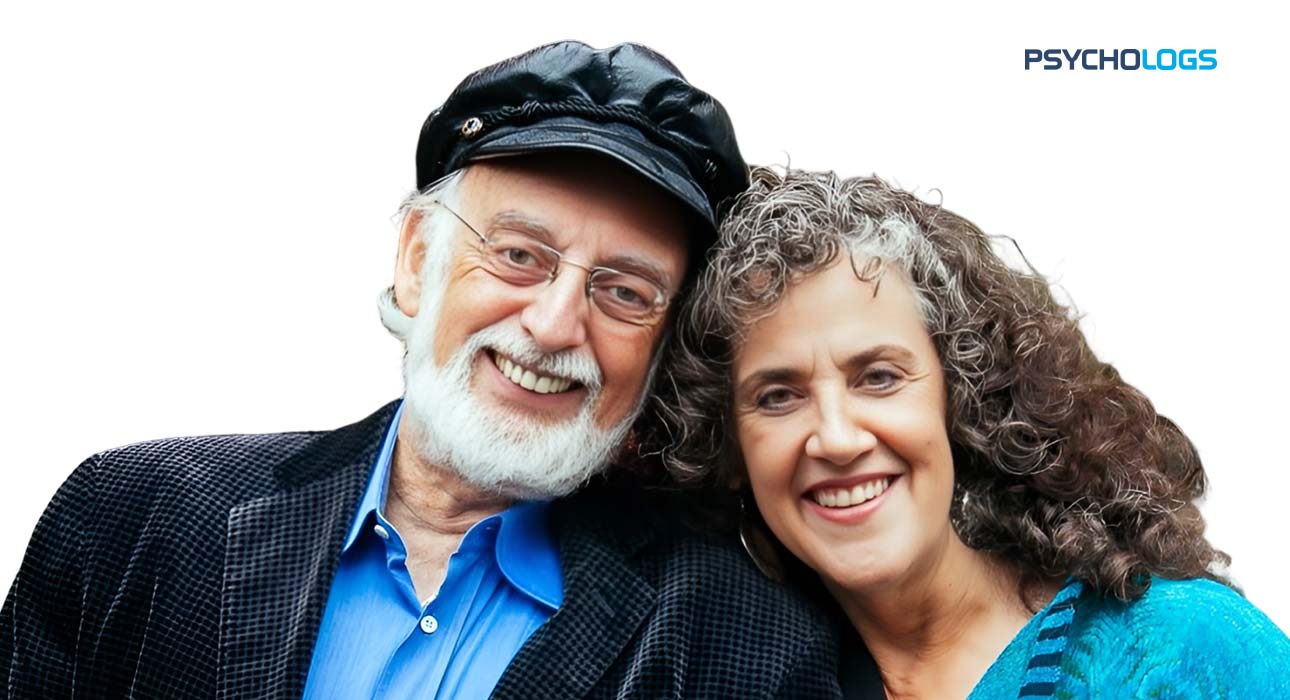
Dr John Gottman is a psychological researcher and clinician who has spent over 40 years studying the habits of married couples. He, along with his wife, Dr Julie Gottman, co-founded the Gottman Institute to help couples develop stronger, healthier relationships. Through extensive research, including observing couples in a lab setting designed to mimic real-life interactions, Dr Gottman became famous for his ability to predict divorce with over 90% accuracy. This research led to the development of the Gottman Method, a therapeutic approach that helps couples navigate conflict, deepen intimacy, and create lasting connections.
Read More: Bowlby’s Attachment Theory and Its Lasting Impact on Modern Parenting Models
The Gottman Method
The Gottman Method is used in couples therapy and includes a thorough checkup of the couple’s relationship and integrates research-based interventions based on the Sound Relationship House Theory. The goals of this method in couples therapy are to disarm conflicting verbal communication, increase intimacy, respect, and affection, remove barriers that create a feeling of stagnancy, and create an increased level of empathy and understanding within the context of the relationship.
The Four Horsemen of the Apocalypse
Couples often struggle with conflicts in their relationships. Gottman identifies four common communication issues associated with conflicts between couples and calls them the four horsemen of the apocalypse.
1. Criticism
Healthy criticism is often a part of effective communication. In some relationships, what happens is that people often focus on winning the argument without validating their partner’s opinion. So, what they do is attack the partner’s character rather than address the specific behaviours.
2. Defensiveness
In some unhealthy relationships, one person often does not take responsibility for their actions. They constantly respond with excuses and always play the victim. As a result, the partner becomes overwhelmed, conflicts become frequent, and the strength of their bond weakens over time.

3. Stonewalling
Each person has their own way of dealing with conflicts. The nature of the way is very influential when it comes to relationships. Stonewalling is often an unhealthy way that worsens conflicts between partners. In stonewalling, the partner withdraws from conversations, shuts down emotionally, and refuses to engage. You can imagine the consequences. The problem remains unsolved. In the long run, it will affect the intensity of the relationship.
4. Contempt
Respecting each other is a key part of a healthy relationship. Another predictor of relationship failure is showing contempt towards the partner. This involves expressing disrespect, sarcasm, or belittling remarks. No one is perfect; everyone has their strengths and imperfections. Understanding and accepting this is very important in your relationships. That doesn’t mean you need to suffer if your partner is toxic and unhealthy. Here, we are talking about minor issues. If you find your partner is not good at something, you can give them constructive feedback. You can support each other for mutual growth. Your areas of interest may differ. That’s also an opportunity to learn different perspectives.
By recognising these negative communication patterns, you can work toward replacing them with healthier communication strategies, such as expressing needs gently, showing appreciation, taking accountability, and staying emotionally engaged during discussions.
The Sound Relationship House Theory
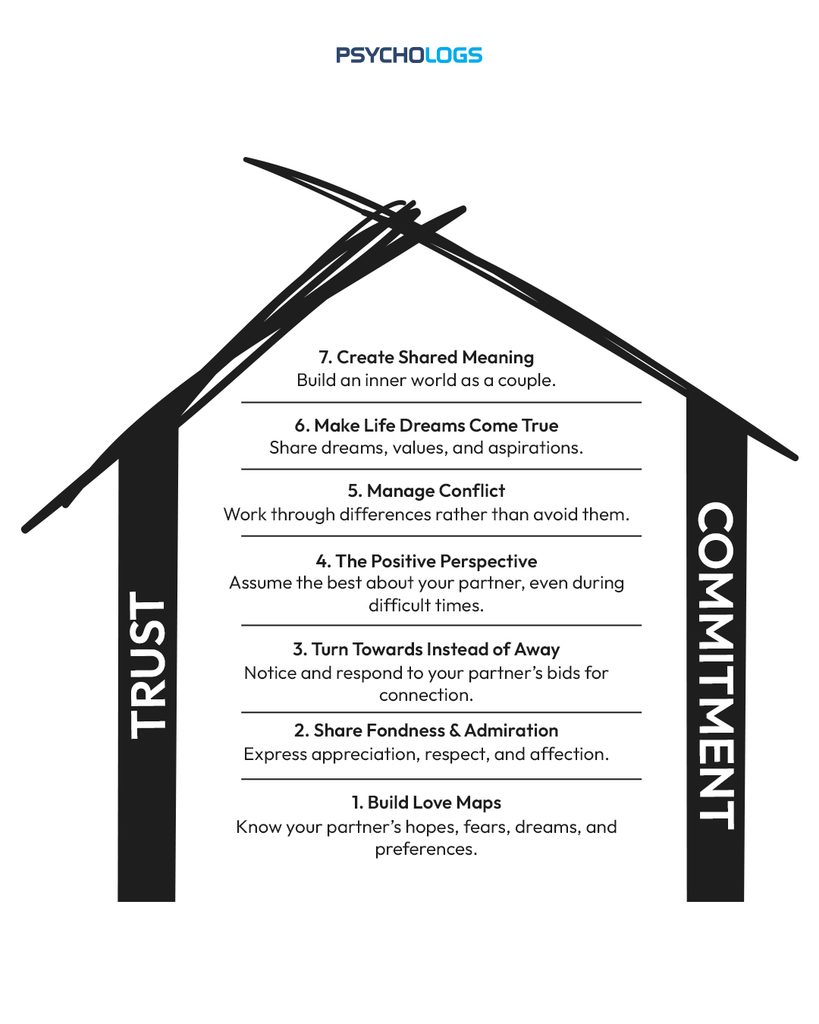
The basis of the Gottman method is the Sound Relationship House Theory. This theory compares healthy relationships with a house. This theory involves seven floors that couples go through to improve their relationships, along with two weight-bearing walls to increase their bonding. Hence, there are nine components of healthy relationships.
1. Build Love Maps
This is the first level of the sound relationship house. Here, you understand each other intimately, including their hopes, dreams, fears, and preferences. Knowledge of the little things about your partner will develop an intact base for your friendship, intimacy, and strong emotional connection.
2. Share Fondness and Admiration
On this second floor, couples express appreciation and respect for each other. This involves telling your partners about characteristics that you love or are proud of. This may be big or small. You can use statements like “I’m proud of your accomplishments” or “I appreciate that you are thoughtful”.
3. Turn Towards Instead of Away
The third floor emphasises the importance of turning towards in a relationship instead of away. You need to be aware of your partner’s bids for emotional connection. Partners often long to get noticed and accepted. Hence, ignoring or rejecting it may lead to conflicts and frustrations. Try to understand when your partner seeks affection or comfort, and validate them.

4. The Positive Perspective
On this floor, you assume the best about your partner’s intentions, even in challenging circumstances. If you are approaching your partner with a negative attitude (e.g., suspicion), then you only see the negative in them. Whatever they say won’t convince you. This often results in relationship failures. So, on this fourth floor, you see each other as being on the same team rather than opponents.
When you build this perspective, then you will approach conflicts with more understanding and patience rather than suspicion or defensiveness. This can build trust, emotional safety, and overall relationship resilience.
5. Manage Conflict
Conflicts are also a part of relationships. This floor focuses on managing conflicts rather than eliminating them. Firstly, you should know the difference between solvable and perpetual problems. Solvable problems may be about something situational, and they do not have a deeper meaning. However, 69% of relationship conflicts are due to perpetual problems. These may be differences in your personality or lifestyle that frequently cause conflict. These problems need to be managed. You can manage your conflicts through a three-step process. Firstly, you have to accept your partner’s influence. Secondly, you have to talk about your problems. Lastly, practice self-soothing techniques to deal with your conflicts and frustration gently.
6. Make Life Dreams Come True
On this sixth floor, the couple shares each other’s dreams, values, convictions, and aspirations. You have dreams as an individual as well as a couple. So, create an environment for your mutual growth, both individually and in your relationship. Support each other in achieving these dreams.
7. Create Shared Meaning
This is the top floor and is similar to building love maps. The difference is that you build and understand an inner world as a couple. Building shared meaning revolves around understanding the key visions, myths, traditions, habits, and symbols that shape your relationship. These Rituals of Connection are what give definition and purpose to the life you and your partner share.

8. Trust
One of the ‘weight-bearing walls’ of the sound relationship house. This is understanding that your partner constantly acts in ways that also prioritise your well-being rather than only their interests. It is a deep confidence that your partner “has your back”: that they will support you in difficult times, make choices that consider your feelings, and remain emotionally available when you need them. When trust is strong, partners feel secure and valued in the relationship, which fosters intimacy, resilience, and long-term happiness.
9. Commitment
Another ‘weight-bearing wall’ is commitment. This involves expressing your commitment to the relationship through words and actions. Here, you are ensuring that you will be there for each other, at best or worst. These two weight-bearing walls help a couple to successfully go through each floor of their relationship.
The Magic Ratio: 5:1
Another important finding from Gottman’s research for lasting relationships is maintaining a healthy balance between positive and negative interactions. According to his studies, happy couples maintain a ratio of at least five positive interactions for every negative interaction. This means that even during conflict, successful couples engage in kind gestures, humour, and validation to soften tension and maintain emotional safety. Dr Gottman says, “When the masters of marriage are talking about something important, they may be arguing, but they are also laughing and teasing, and there are signs of affection because they have made emotional connections.”
The One Negative Interaction
The negative interactions in unhealthy relationships include the four horsemen mentioned above as well as loneliness and isolation. People often think anger is the main cause of conflicts in a relationship, but it is just a normal reaction. Dr Gottman says, “Anger only has negative effects in marriage if it is expressed along with criticism or contempt, or if it is defensive.”
Apart from the four horsemen, body language such as eye-rolling can also be a negative interaction. The negative interactions have greater intensity. That’s why it needs at least five positive interactions to compensate for the effect of one negative interaction.
The Positive Interactions
The predictor of a lasting relationship is how you deal with conflicts in your relationship. Here are some positive interactions healthy couples often use to enhance their closeness.
1. Be Interested
The important part of solving a problem is understanding the cause of it. Listen to your partner’s complaints. Ask open-ended questions. Respond to them as if you are interested; use non-verbal language like nods, eye contact, etc.
2. Express Affection
Expressing affection, physical or verbal, helps reduce stress and increase closeness. This may be holding hands, kissing or embracing your partner. You don’t have to wait for conflicts to do this. This can be practised every day.
3. Demonstrate They Matter
You may have heard that little things matter. Show your partner that you care about them. This can be done by giving importance to their interests, going for small dates to refresh your partner during bad days, or it can be anything.
4. Intentional Appreciation
What you think about your partner and relationship often matters. Think about the positive parts of your relationship, the moments you spend, and the characteristics you love about your partner. Commonly, negative thoughts come to your mind when you are having conflicts. That doesn’t mean there are only negatives. So, intentionally think about the positive, and express your appreciation verbally to your partner, whether big or small.
5. Find Opportunities for Agreement
During conflicts, you may often focus on the negative parts. Instead, seek opportunities for agreement and respond accordingly. This lets your partner feel validated and cared for.
6. Empathise and Apologise
Showing empathy is an important part of any human connection. Let your partner feel that you understand them, either verbally or nonverbally. If you make a mistake or hurt your partner, don’t hesitate to apologise. This doesn’t make you small but strengthens your relationship.
7. Accept Your Partner’s Perspective
Accepting your partner’s perspective doesn’t mean you agree with them. It’s validating their perspectives and opinions. For this, you can summarise your partner’s experience during a conflict. It simply means showing respect to their feelings and thoughts even if you disagree.
8. Make Jokes
During a heated argument, playful teasing, playfulness, and finding times to laugh together can reduce tension. The majority of couples simply tell each other inside jokes. This emphasises how exclusive a couple is. A word of advice, though: always remember to find a method to joke around with your spouse that keeps them feeling valued and respected while still strengthening your bond.
Read More: Robert Sternberg’s Triangular Theory of Love

Final Thoughts: Love is a Skill, Not Just a Feeling
Gottman’s method is a result of rigorous research over years. It’s effective because it focuses on understanding human emotions and communication patterns, offers practical strategies couples can implement immediately, and emphasises the importance of both emotional and physical intimacy.
Love isn’t just something that happens; it’s something you build and maintain. Successful relationships require effort, awareness, and a willingness to grow together. By practising the principles of the Gottman Method, couples can create a love that not only lasts but thrives. However, it doesn’t mean that you need to thrive in abusive relationships. If your relationship is unhealthy and abusive, it’s okay to come out and seek legal and other professional support. This method focuses on relationships that can be managed and transformed into healthy ones.
Whether you’re dating, newly married, or decades into a relationship, there’s always room to deepen your connection. The Gottman Method provides the tools to do just that, helping you turn love from something fleeting into something enduring, fulfilling, and truly magical.
FAQs
1. How does the Gottman Method help relationships?
It provides practical tools and strategies to enhance emotional intimacy, resolve conflicts constructively, and create lasting bonds. The method is based on decades of scientific research and helps couples develop a deeper understanding of each other’s needs and emotions.
2. How can I apply the Gottman Method in my daily life?
Some simple ways to incorporate the Gottman Method include:
- Practising active listening during conversations.
- Expressing appreciation and admiration for your partner regularly.
- Using “I” statements instead of blaming during conflicts.
- Making time for meaningful connections daily.
- Engaging in repair attempts after disagreements.
3. Can the Gottman Method prevent divorce?
While no method can guarantee a relationship will last, the Gottman Method significantly increases the chances of long-term success by addressing key predictors of relationship breakdown and providing couples with the tools to navigate challenges effectively.
4. Is the Gottman Method only for married couples?
No, the principles of the Gottman Method can be applied to couples at any stage, whether dating, engaged, married, or in long-term partnerships. It also benefits any close relationship, including friendships and family dynamics.
5. How long does it take to see results using the Gottman Method?
The time frame varies depending on the couple and the effort put into applying the techniques. Some couples notice improvements within weeks, while bigger changes may take months of consistent practice and communication.
6. Can I practice the Gottman Method without a therapist?
Yes! While therapy sessions with a Gottman-trained professional can be beneficial, many of the principles can be learned and applied independently through books, workshops, or online resources from the Gottman Institute.
References +
Benson, K. (2024, September 18). The magic relationship ratio, according to science. The Gottman Institute. https://www.gottman.com/blog/the-magic-relationship-ratio-according-science/
Fulwiler, M. (2024, June 26). Managing Conflict: Solvable vs. Perpetual Problems. The Gottman Institute. https://www.gottman.com/blog/managing-conflict-solvable-vs-perpetual-problems/
The Gottman Institute. (2024, December 12). The Gottman Method – about | The Gottman Institute. https://www.gottman.com/about/the-gottman-method/
Vinney, C., PhD. (2023, November 15). Overview of the Gottman Method. Verywell Mind. https://www.verywellmind.com/what-is-the-gottman-method-5191408