
Memory is a process of an active system that consists of three stages. The first is encoding, where the information is given by the sensory processes; the second process is storage, where the information is held for some period of time. The third and last process is retrieval, where the information is used in a usable form. There are three types of memory: Sensory Memory, Short-Term Memory, Rehearsal and Long-Term Memory.
A piece of information only goes to long-term memory when the information is efficiently rehearsed. Once the memory goes into long-term memory, it rarely fades(Cicceralli et al., 2023). Human memory has been intriguing since the emergence of psychology as an official branch. Experiments on memory are usually found in Experimental Psychology.
Read More: Key Differences Between Working Memory and Short-Term Memory
Understanding Forgetting
Forgetting, in simple terms, means when the information fades away from memory. This essentially happens when the information is not encoded well and is not rehearsed. One of the beneficial aspects of forgetting is that it keeps the unwanted and unnecessary information aside, which then helps the necessary information to remain.
Forgetting helps in distinguishing between the necessary and unnecessary information. When a certain piece of information is forgotten and when it is relearned, it is retrieved much better. There are two important reasons why forgetting occurs. The first is inefficient encoding. When individuals do not pay attention to the information in the first place, forgetting can easily happen. The second is decay(Feldman,2021).
The Pioneer of the Forgetting Curve: Hermann Ebbinghaus
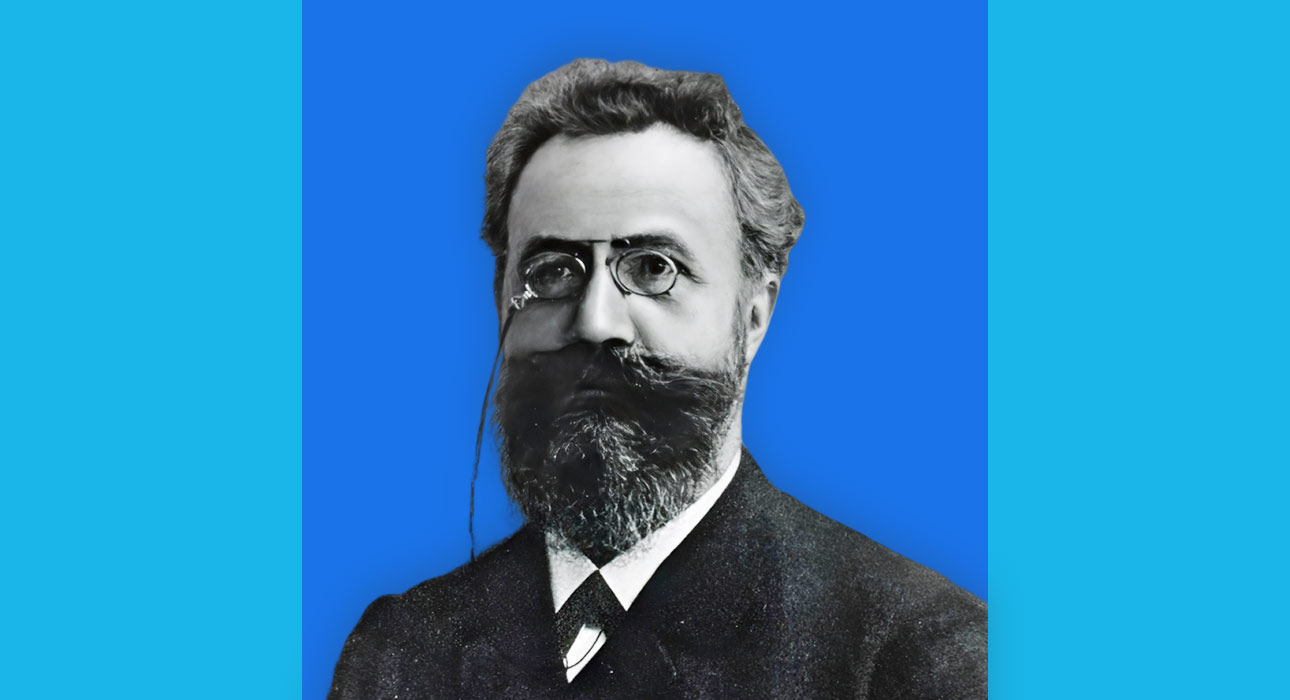
Hermann Ebbinghaus (1850-1909) was a German psychologist. He has been considered a prominent figure in the development of experimental methods for the measurement of rote learning, memory and forgetting. He also received a PhD degree from the University of Bonn in 1894. Also he not only contributed to the literature of forgetting and studied colour vision in 1890(Britannica Editors, 2026).
The Forgetting Curve
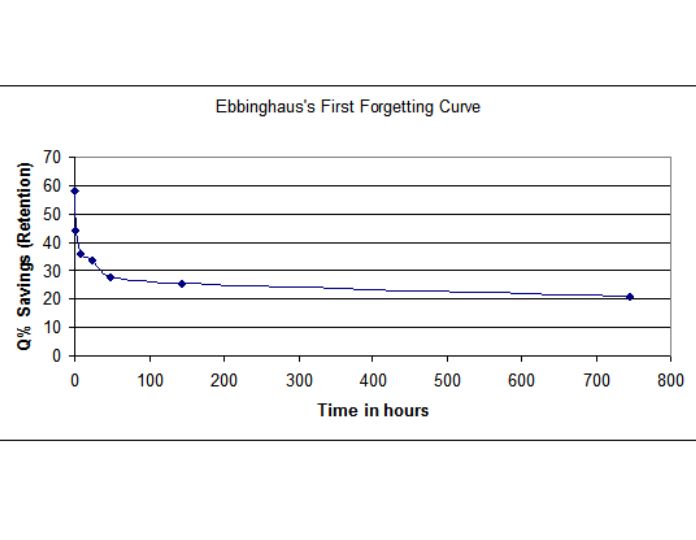
Hermann Ebbinghaus made the very first attempt to study forgetting about 100 Years ago. He used himself as the only participant in his study; it was and remains interesting that even though there were not many participants in his study, the results are still applicable in contemporary times as well. By using himself as the only participant, Ebbinghaus created a list of 2,300 syllables which he learnt and kept recording how many syllables he forgot over time.
The syllables which he created were nonsense syllables which had no meaning to them. Ebbinghaus recorded the time duration in which he forgot. The result was that a ‘forgetting curve’ was derived. Ebbinghaus came to the conclusion that the most rapid forgetting occurs in the first nine hours, and it eventually declines after 9 hours. He also emphasised that after 15 days fortnight absolute forgetting occurs if the information is not rehearsed well.
His principle is still used in psychometric testing, especially while determining the reliability of the test. When determining the alternate and parallel forms of reliability, the second test is often given after a complete fifteen days to ensure that the subject does not remember any content of the test (Singh, 1986; Feldman, 2023).
History of the Forgetting Curve
From 1879 onwards Ebbhinghaus began his extensive research of six years on forgetting. Finally, in 1885, he published his first book consisting of nine chapters, ‘ Memory: A Contribution to Experimental Psychology’, in which he gave a detailed account of how he conducted his study and explained his method of statistical analysis. The forgetting curve is also known as: “forgetting function,” retention curve,” or “retention function.
It has been 123 years since he published his work. There is still research and experimental studies going on that are either aimed at improving the methodology or conducted for academic purposes. This study on forgetting also becomes remarkable as there are mathematical functions which support it, such as logarithmic functions, exponentials and power functions(Robertson,2009).
The Groundbreaking Experiment
Ebbinghaus defined memory as ‘learning, retention, association and reproduction’. Ebbinghaus was the only participant in this longitudinal study. One of the important goals of this experiment was to understand and find the relationship between retention and time since learning. Ebbinghaus tried multiple methods to understand how much time forgetting takes place.
He initially tested himself with poems, stanzas, and numbers, but they did not yield beneficial results. Tones were difficult to handle and reproduce; he did not find numerical digits to be suitable, and considering poems, the meaning was too variable, leading to measurement error. These problems became a reason for him to try nonsense syllables. Nonsense syllables were three-letter meaningless words. He made use of eleven vowels and nineteen consonants.
He saw that these syllables had two advantages: the first being that they were homogeneous, and the second being that they had no meaning. His forgetting curve is based on seven months of recording his retained information; he recorded his retained information three times a day. Ebbinghaus’ basic stimulus became his 163 different lists of thirteen rows of nonsense syllables.
He then divided the 163 lists into eight lists and dedicated time to relearn these lists. He studied this row until he could recall all the syllables. One of the important aims of this study was to assess how much information he was able to remember(Murre et al.,2015; Robertson, 2008; Cofer, 1979).
Read More: Information Processing Theory in Psychology
Conditions Maintained during the Experiment
According to Ebbhinghaus (1913), certain rules were made to memorise, and they are as follows:
- The rows were read through from the beginning to the end and were not learned separately. He also made sure not to learn difficult parts too frequently. All the syllables were given equal importance.
- The reading and recitation took place at a constant speed of 150 strokes per minute. The ticking of the clock was used to measure these strokes; this also helped in sustaining attention.
- It becomes difficult to speak without variation in accent; hence, certain syllables were spoken with the same accent. For example: 1st, 4th, 7th.
- After learning each series, he took a break of 15 seconds and utilised this time to prepare for tabulation.
- The smallest of small distractions was also avoided in order to achieve the aim of the experiment.
- Learning was carried out by using natural memory. He made sure not to associate the syllables with any meaning.
- One of the most crucial parts of this study was that Ebbinghaus controlled changes and irregularities in life conditions. However, this had certain limitations because the study was conducted for up to seven months.
Was Forgetting Curve Replicated?
Multiple researchers in the field replicated the experiment and found somewhat similar results. Replications have been successful. Researchers argue that Ebbinghaus did not mention many details, which caused some errors when they tried to replicate the curve. Radossawljewitsch (1907) and Finkenbinder (1913) made early attempts to replicate the experiment; their studies aimed at observing patterns of forgetting, but their procedures differed from the original study.
In 1991, Heller, Mack, and Seitz conducted a more comprehensive experiment where they made use of savings methods and followed the original procedure. More recently, Murre and Dros (2015) conducted a study that was very much consistent with the results of the original study. They systematically replicated the forgetting curve by examining retention intervals ranging from 20 minutes to 31 days. This replication study supported the notion that forgetting occurs sharply as soon as the learning takes place(Murre et al.,2015).
Other Interesting Study on Memory: Sperling Iconic Memory Test
George Sperling conducted a study on iconic memory (memory which lasts visually for a fraction of a second). In his early study, he found that his subjects could remember only about four to five letters, even when he presented the grid many times. He did this by using a grid of letters and a machine to present these letters. Sperling believed this method underestimated iconic memory because people naturally read letters from top to bottom and forget the ones at the top before they finish, so the information fades away.
Hence, Sperling developed a technique called the Partial Report Method. In this method, he showed participants a grid of letters and then played a high, medium, or low tone immediately afterwards to signal which row to report. Sperling asked participants to report the top row of letters if they heard a high tone, and to follow the same procedure for the other rows. This technique enabled Sperling to understand that participants now reported any row from the grid and that iconic memory had the capacity to capture everything at once(Sperling,1960).
| Rows of Letters | Tone Signalling Which Row to Report |
| LHTY | High Tone |
| EPNR | Medium Tone |
| SBAX | Low Tone |
Conclusion
Memory is a process of encoding, storing, and retrieving information. We can retain information only when we rehearse it efficiently and transfer it to long-term memory. Forgetting, in simple terms, is memory fading away. There are two important reasons behind forgetting: first, we do not encode the information well, and second, we do not use it efficiently.
Hermann Ebbhinghaus conducted a longitudinal study where he examined how quickly a human being can forget. He was the only participant in his study. His curve estimated that forgetting occurs rapidly within the first nine hours, and that after fifteen days, people lose the information completely if they do not rehearse it. Psychologists consider his study one of the classical studies in experimental psychology, and many researchers still replicate it.
One of the most fascinating parts of his experiment was the generalizability of the results. He was the only subject in his study, but the results from his study are accurate even in a general sample because humans tend to forget after fifteen days.
References +
- Feldman, R. S. (2012). Understanding psychology (11th ed.). McGraw-Hill Education.
- Ciccarelli, S. K., & White, J. N. (2019). Psychology (6th ed.). Pearson.
- Britannica Editors (2026, February 22). Hermann Ebbinghaus. Encyclopedia Britannica. https://www.britannica.com/biography/Hermann-Ebbinghaus
- Robertson, G. S. (2009, June 25). A brief synopsis of the long history of forgetting curves: A review of the progression from initial discovery to mathematical definition. Ideationizing. https://www.ideationizing.com/2009/06/brief-synopsis-of-long-history-of.html
- Murre, J. M., & Dros, J. (2015). Replication and Analysis of Ebbinghaus’ Forgetting Curve. PloS one, 10(7), e0120644. https://doi.org/10.1371/journal.pone.0120644
- Cofer, C. N. (1979). Human learning and memory. The first century of experimental psychology, 323-370. https://books.google.co.in/books?hl=en&lr=&id=GTz3DwAAQBAJ&oi=fnd&pg=PA323&dq=History+of+hermann+ebbinghaus+forgetting+curve&ots=tObshhxjg0&sig=BB7xqOivq7XPqjG_RDfiB9aDpwU&redir_esc=y#v=onepage&q&f=false
- Ebbinghaus, H. (1913). Memory. Рипол Классик. https://books.google.co.in/books?hl=en&lr=&id=B8QMAwAAQBAJ&oi=fnd&pg=PR1&dq=History+of+hermann+ebbinghaus+forgetting+curve&ots=muep02HQ1I&sig=I3a-JD-gBRh__5DZRk68iMKgO3E&redir_esc=y#v=onepage&q&f=true
- Singh, A. K. (1986). Tests, measurements and research methods in behavioural sciences. Tata McGraw-Hill.
- Sperling, G. (1960). The information available in brief visual presentations. Psychological Monographs, 74(11), 1-29. https://doi.org/10.1037/h0093759?urlappend=%3Futm_source%3Dresearchgate.net%26utm_medium%3Darticle