



He came home from war, settled into a career, got married, and raised kids; by all accounts, he had moved on. But years down the line, the nightmares kept coming. He could not sleep through the night, would snap into anger without warning, felt hollow inside, and kept getting jolted by things that reminded him of the past. Psychiatrist Bessel van der Kolk discusses experiences like this in The Body Keeps the Score, showing how the effects of trauma can continue long after the original threat is gone (van der Kolk, 2014).
These days, words like “traumatised” and “traumatic” get tossed around a lot. But in psychology, trauma has a much narrower definition. Just because someone is scared or goes through something painful does not mean they have PTSD. Many people feel shaken after something bad happens, but over time, these reactions gradually settle.
The World Health Organisation estimates that around 70% of people worldwide experience a potentially traumatic event during their lifetime, but only around 5.6% of trauma-exposed people develop PTSD (World Health Organisation [WHO], 2026). So, what is actually happening when the threat is over but the body and mind continue to respond as though danger is still present?
What Is PTSD?
Post-Traumatic Stress Disorder is a mental health condition that can develop after someone experiences or witnesses actual or threatened death, serious injury, or sexual violence. It is not ordinary stress dialled up to eleven. It involves a persistent pattern of symptoms that can affect how someone remembers, thinks about, and reacts to the traumatic experience in everyday life (American Psychiatric Association, 2022; U.S. Department of Veterans Affairs [VA], 2026).


The key word is persistent. Right after something terrifying happens, almost anyone may experience intense psychological and physical reactions. A person may become highly alert, jumpy, have difficulty sleeping, or repeatedly think about what happened. For many people, these reactions gradually settle as the brain and body begin to register that the danger has passed.
PTSD develops in a smaller proportion of people when trauma-related symptoms persist and become sufficiently severe to cause significant distress or interfere with everyday functioning. Not everyone with a bad memory gets PTSD. Simply experiencing something awful or remembering it vividly is not enough for a diagnosis. It comes down to the pattern, intensity, and duration of symptoms, as well as the extent to which they interfere with a person’s life.
Read More: Complex PTSD: Effects, Treatment, and Recovery
When the Past Won’t Stay Put
What throws people, including those with PTSD themselves, is that the past can sometimes feel remarkably present. A sound, a smell, a street corner, or even a conversation can trigger memories or distress associated with the trauma. These reminders do not have to be dangerous themselves. Through learning and association, the brain can connect otherwise ordinary cues with the original threat. Someone else might hear a certain song and barely notice it. For someone with PTSD, the same song may trigger a strong emotional or physical response if it has become associated with the traumatic experience. PTSD symptoms fall into four main groups:
- Re-experiencing: Flashbacks, nightmares, intrusive memories, or intense emotional or physical reactions when confronted with reminders of the trauma.
- Avoidance: Steering clear of people, thoughts, places, activities, or conversations that are associated with the trauma.
- Negative changes in thoughts and mood: Guilt, shame, fear, persistent negative beliefs, emotional detachment, numbness, or reduced interest in things that once mattered.
- Changes in arousal and reactivity: Being unusually alert to possible danger, becoming easily startled or irritable, struggling to concentrate, or sleeping poorly (VA, 2026).
But these groups only paint part of the picture. Someone can continue attending work, caring for family, studying, and going through everyday routines while privately struggling with nightmares, avoidance, emotional disconnection, or persistent alertness.
Why Does the Past Feel So Present?
Some memories fade into the background. Others remain unusually powerful. Psychological theories help explain why trauma memories can behave differently from ordinary memories. Ehlers and Clark’s (2000) cognitive model suggests that PTSD can persist when trauma leads a person to interpret the world, themselves, or the consequences of the event as indicating continuing danger. Traumatic memories may also contain highly vivid sensory details that are not fully integrated with the broader context of when and where the event happened. As a result, reminders can produce a powerful sense of present threat even when the person is objectively safe.
Brewin and colleagues (1996) proposed that traumatic experiences can be represented through different forms of memory. Some aspects can be deliberately recalled, while others may be activated automatically by cues associated with the event. This helps explain why a person can intellectually know that something happened years ago while still experiencing a powerful reaction when encountering a reminder.
Stress also affects how memories are formed, retrieved, and updated. These effects can be useful during danger, helping attention and memory prioritise information relevant to survival. But when threat-related learning becomes persistent or inflexible, it may contribute to intrusive memories, heightened fear, and difficulty updating the sense that the present is safe (Schwabe, 2025). This is why PTSD is not simply “dwelling on the past.” It can involve changes in how memory, attention, threat perception, and emotional responses interact.
When Avoidance Takes Over
Avoidance actually works in the short run. Staying away from something that triggers distress can provide immediate relief. The trouble starts when avoidance becomes the main strategy for managing trauma-related reactions. Life can gradually shrink: not travelling, avoiding crowded places, refusing to discuss what happened, withdrawing from social circles, or missing activities that once mattered.

It is understandable, but the price can be high. Over time, daily life can become organised around preventing distress rather than participating fully in life. This is one reason avoidance is an important part of PTSD treatment. Reducing avoidance can give people opportunities to learn, in a safe and structured way, that reminders of the trauma are not necessarily signs of present danger.
PTSD Messes with the Body, Too
PTSD is classified as a psychological disorder, but its effects are not limited to thoughts and emotions. When the brain detects danger, it activates systems that prepare the body to respond. Heart rate can increase, muscles can tense, attention can become focused on possible threats, and the body becomes ready for action. Normally, these responses settle when the danger passes. With PTSD, threat-related systems can remain unusually sensitive or become easily activated by reminders. This can contribute to being easily startled, persistent tension, irritability, and sleep difficulties.
Brain-imaging research has not identified one single “PTSD spot.” Instead, studies have found functional differences across networks involved in memory, emotion, threat processing, and regulation, including areas such as the amygdala, hippocampus, insula, prefrontal cortex, and cingulate regions (Bremner, 2026). PTSD is therefore not understood as a problem in one “broken” part of the brain. It involves interactions among biological, psychological, and social factors.
PTSD has also been associated with poorer physical health, including greater reports of pain and cardiopulmonary and gastrointestinal complaints. However, these are associations and do not mean that PTSD directly causes every physical health problem experienced by someone with the disorder (Pacella et al., 2013). So, saying trauma is simply “stored in the body” misses an important distinction. A more scientifically accurate explanation is that traumatic experiences can influence brain processes, memory, physiological arousal, and the body’s responses to perceived threat even after the original danger has passed.
Culture Changes the Story
Trauma does not play out the same way everywhere. How people understand PTSD, describe their symptoms, seek help, and respond to treatment can all be shaped by culture and social expectations. In some settings, psychological distress may be described mainly through emotions. In others, a person may first notice physical symptoms such as pain, stomach problems, or difficulty sleeping. Family attitudes towards mental health can also affect a person’s decision to seek professional help.
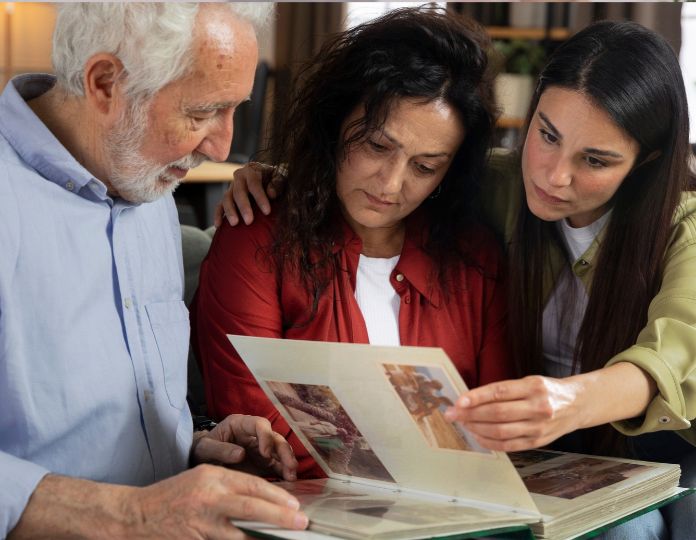
Research on PTSD in India has found that trauma is identified, measured, experienced, and treated differently across populations, highlighting the need for culturally sensitive assessment and treatment approaches (Gilmoor et al., 2019). Understanding PTSD therefore means looking beyond a checklist. It means paying attention to how a person’s background, relationships, beliefs, and social environment shape their experience and their access to support.
Why Do Some People Develop PTSD and Others Don’t?
There is no single answer. Two people might experience the same disaster: one eventually recovers, while the other develops persistent PTSD symptoms. That difference is not evidence that one person is stronger or weaker. Risk factors can include the severity or nature of the trauma, repeated or prolonged exposure, previous traumatic experiences, physical injury, witnessing harm, individual psychological and biological factors, and the availability of social support (WHO, 2026).
But risk factors do not determine the outcome. A person can experience several risk factors and recover without developing PTSD, while another person may develop symptoms despite appearing to cope well initially. PTSD can also have delayed expression, meaning that the full pattern may emerge later rather than immediately after the trauma (VA, 2026). Really, PTSD is less about the event alone and more about the interaction between the event and the person’s psychological, biological, social, and environmental context.
What’s the Line Between Stress and PTSD?
Right after a traumatic event, people may feel overwhelmed, struggle to sleep, become unusually alert, or repeatedly think about what happened. These reactions do not automatically mean PTSD. There is also acute stress disorder (ASD), which can involve symptoms similar to PTSD but occurs from three days to one month after trauma exposure. PTSD requires the characteristic symptom pattern to persist for more than one month and to cause clinically significant distress or impairment (VA, 2026).
A diagnosis requires more than experiencing a difficult event or feeling traumatised. A qualified professional considers the nature of the traumatic exposure, the full pattern of symptoms, their duration and severity, their impact on functioning, and whether another medical or psychological explanation better accounts for them.
What Actually Helps?

Treatment is not about telling someone to “just forget” what happened. The goal is to address the patterns that keep PTSD going. Current clinical guidelines strongly support trauma-focused psychotherapies such as Prolonged Exposure (PE), Cognitive Processing Therapy (CPT), and Eye Movement Desensitisation and Reprocessing (EMDR) (VA, 2026).
- Prolonged Exposure helps people gradually approach trauma memories and situations they have been avoiding within a structured therapeutic setting. The purpose is not to overwhelm the person, but to reduce avoidance and support new learning about safety.
- Cognitive Processing Therapy focuses on the meanings and beliefs that developed after trauma. Someone might come to believe, for example, “It was my fault” or “Nowhere is safe.” Therapy helps examine these interpretations and develop more balanced ways of understanding what happened.
- EMDR uses structured procedures involving attention to traumatic material alongside bilateral stimulation. Research supports its effectiveness, although the exact mechanisms behind its effects are still being investigated. It is therefore more accurate to describe EMDR as an evidence-supported psychotherapy than to claim that eye movements themselves simply erase or “re-file” traumatic memories.
- Medication may also be an option. Sertraline, paroxetine, and venlafaxine have evidence supporting their use for PTSD symptoms, although the choice of medication depends on the person’s symptoms, medical history, preferences, side effects, and other clinical considerations (VA, 2026).
- Self-care, regular sleep, routines, physical activity, stress management, and staying connected with supportive people can also support recovery. But self-care is not a substitute for professional treatment when symptoms are persistent or significantly affecting everyday life.
Why Trauma-Informed Care Matters
Even effective treatment can be difficult if a person does not feel safe or respected. Trauma-informed care is about recognising how trauma can affect a person’s sense of safety, trust, control, and ability to engage with care. It aims to create environments that reduce unnecessary distress and avoid reinforcing feelings of powerlessness. That can mean being upfront about what is going to happen, offering choices where possible, respecting boundaries, listening without judgment, and recognising the person as more than a diagnosis.
Trauma-informed care therefore is not simply about asking someone whether they have experienced trauma. It focuses on providing care that prioritises safety, trust, collaboration, empowerment, and sensitivity to each person’s background and circumstances (Substance Abuse and Mental Health Services Administration [SAMHSA], 2014).
Conclusion: Beyond “Just Get Over It”
PTSD is not weakness or attention-seeking. It is not a personal failure. But not every difficult experience is PTSD, either. Both misunderstandings can cause harm, either by making ordinary distress seem pathological or by telling someone with genuine PTSD to simply push through it. What happens during a traumatic moment is only the beginning.
How a person processes memories, responds to reminders, makes sense of the experience, manages avoidance, and receives support all influence their recovery. The threat may have passed, but the nervous system may take time to recognise that it is safe again. Instead of saying “just move on,” understanding PTSD starts with appreciating why, for some people, moving forward can be much more complicated than it looks.
References +
- American Psychiatric Association. (2022). Diagnostic and statistical manual of mental disorders (5th ed., text rev.; DSM-5-TR). American Psychiatric Association Publishing.
- Bremner, J. D. (2026). Functional brain imaging in posttraumatic stress disorder: A review. Journal of Neural Transmission. https://doi.org/10.1007/s00702-026-03228-7
- Brewin, C. R., Dalgleish, T., & Joseph, S. (1996). A dual representation theory of posttraumatic stress disorder. Psychological Review, 103(4), 670–686. https://doi.org/10.1037/0033-295X.103.4.670
- Christie, H., Hamilton-Giachritsis, C., Alves-Costa, F., Tomlinson, M., & Halligan, S. L. (2019). The impact of parental posttraumatic stress disorder on parenting: A systematic review. European Journal of Psychotraumatology, 10(1), 1550345. https://doi.org/10.1080/20008198.2018.1550345
- Dworkin, E. R., Brill, C. D., & Ullman, S. E. (2019). Social reactions to disclosure of interpersonal violence and psychopathology: A systematic review and meta-analysis. Clinical Psychology Review, 72, 101750. https://doi.org/10.1016/j.cpr.2019.101750
- Ehlers, A., & Clark, D. M. (2000). A cognitive model of posttraumatic stress disorder. Behaviour Research and Therapy, 38(4), 319–345. https://doi.org/10.1016/S0005-7967(99)00123-0
- Gilmoor, A. R., Adithy, A., & Regeer, B. (2019). The cross-cultural validity of post-traumatic stress disorder and post-traumatic stress symptoms in the Indian context: A systematic search and review. Frontiers in Psychiatry, 10, 439. https://doi.org/10.3389/fpsyt.2019.00439
- Pacella, M. L., Hruska, B., & Delahanty, D. L. (2013). The physical health consequences of PTSD and PTSD symptoms: A meta-analytic review. Journal of Anxiety Disorders, 27(1), 33–46. https://doi.org/10.1016/j.janxdis.2012.08.004
- Schwabe, L. (2025). Memory under stress: From adaptation to disorder. Biological Psychiatry, 97(4), 339–348. https://doi.org/10.1016/j.biopsych.2024.06.005
- Substance Abuse and Mental Health Services Administration. (2014). SAMHSA’s concept of trauma and guidance for a trauma-informed approach. U.S. Department of Health and Human Services.
- U.S. Department of Veterans Affairs, National Centre for PTSD. (2026). PTSD and DSM-5. U.S. Department of Veterans Affairs.
- U.S. Department of Veterans Affairs, National Centre for PTSD. (2026). Overview of psychotherapy for PTSD. U.S. Department of Veterans Affairs.
- van der Kolk, B. A. (2014). The body keeps the score: Brain, mind, and body in the healing of trauma. Viking.
- World Health Organisation. (2026). Post-traumatic stress disorder. World Health Organisation.