


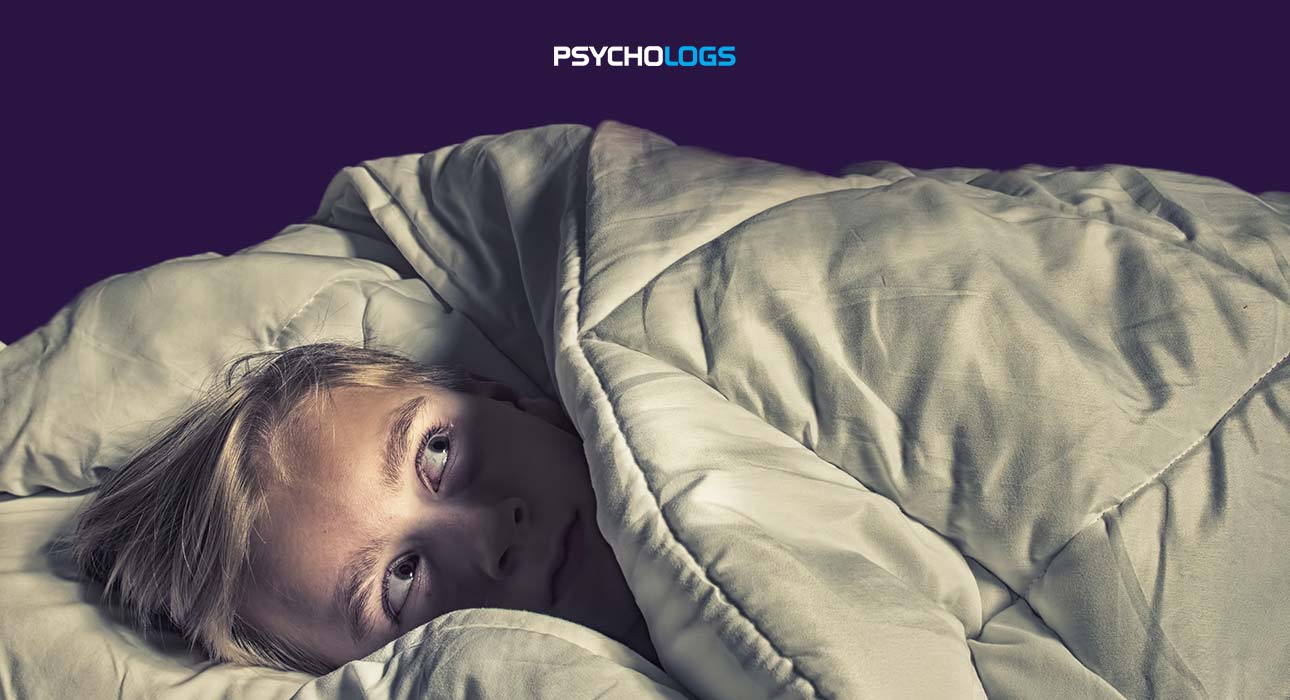
Have you ever felt like you’re just moments away from sleeping when your name is called? Perhaps you saw a flash or shadow, experienced a feeling as you were about to fall, felt like someone else was in the room with you, only to become fully aware and realise nobody was actually there. Situations like these can be extremely disconcerting, mostly because they can feel so extraordinarily realistic.
Yet, for many people, they occur during a normal and fascinating transition of consciousness known as the hypnagogic state. Studies show almost 70- 75% of people have experienced vivid lights, sounds, or sudden feelings of falling during the exact moments they drift off to sleep at least once during their lifetime (Cleveland Clinic, 2022).
Understanding these experiences is particularly relevant in a world where irregular sleep schedules, stress, sleep deprivation, and disrupted routines are increasingly common. Although occasional episodes are often harmless, frequent or distressing experiences may sometimes signal an underlying sleep disorder or another health concern.
What Actually Are Hypnagogic Hallucinations?
Hypnagogic hallucinations occur during the transition from wakefulness to sleep; this can take several forms, from distorted or faint visual cues to lucid dreams in a waking state. The real indicator of what makes the whole scenario truly hypnagogic is that, during what feels like being deep in a dream, the person is partially conscious, giving a highly unsettling sensation that this internal dream space has forcefully spilt over into their own reality (Cleveland Clinic, 2022; Humpston et al., 2016).

It’s hard to gauge exactly how many hypnagogic experiences happen each year, though the figure would appear to be in the millions. Research suggests that hypnagogic states are common, with many people experiencing them at least occasionally, although reported prevalence varies depending on how the experience is defined and measured (Haar Horowitz et al., 2022).
The word ‘hallucination’ typically carries negative connotations associated with psychosis or a serious mental illness. A hypnagogic hallucination isn’t a consequence of being clinically diagnosed with something serious and simply arises as a normal effect as the brain moves from a waking state to sleep (Humpston et al., 2016).
Read More: Understanding Semantic Memory
What Do Hypnagogic Hallucinations Feel Like?
These phenomena can range across the senses, with numerous prevalent varieties recorded as:
- Visual hallucinations: Can entail anything from random flashes of colour and light to full figure objects and faces.
- Auditory hallucinations: Might hear anything from a person’s voice calling your name to various sounds like footsteps, knocking, etc.
- Bodily or tactile sensation: These could include experiencing physical movement, a sense of touch or feeling as one is falling.
- A sense of presence: May have a deep, uncomfortable feeling that someone or something is nearby, even when there is no one (Cleveland Clinic, 2022; Humpston et al., 2016).
Hypnagogic hallucinations only last for a few seconds, mostly until either the mind dives further into sleep or is awakened back into the real world; depending on their predisposition, individuals can either find this to be the strangest and most fascinating experience of their life or an extremely unnerving point, fearing for their sanity.
Why Do Hypnagogic Hallucinations Occur?
Sleep is a process, not an instant ‘off switch’. As people fall asleep, their brain’s state changes dramatically, affecting how they think, perceive things, process information, and even how they’re dreaming. It’s during this sleep-wake transition when the brain is still partially connected to external reality and starts creating internal imagery. This creates a temporary overlap between waking consciousness and dream-like experience (Haar Horowitz et al., 2022).
The relationship between hypnagogic experiences and sleep stages is complex. REM sleep is strongly associated with vivid dreaming, and researchers have proposed that some sleep-related hallucinations may reflect aspects of dream imagery or REM-related processes intruding into waking consciousness.
This explanation is particularly relevant in conditions such as narcolepsy, in which REM sleep can occur unusually soon after sleep onset (Hobson, 2005; Thorpy et al., 2024).
However, hypnagogic experiences should not be understood as simple “mini-dreams” produced entirely by REM sleep. Research indicates that the sleep-wake transition and non-REM processes can also contribute to unusual sensory experiences. Therefore, scientists continue to investigate exactly how changing brain states, sensory processing, memory, and dream imagery combine to create these vivid moments (Haar Horowitz et al., 2022; Humpston et al., 2016).
Read More: Two Systems, One Mind: Understanding Human Cognition Through Dual Process Theory
The Connection Between Hypnagogic Hallucinations & Sleep Paralysis
Sleep paralysis often occurs alongside hypnagogic hallucinations. Also, sleep paralysis is a frightening state where people are aware that they’re lying in bed but temporarily unable to move or speak. This usually occurs while going to sleep or upon waking up for no clear reason, and can range from a few seconds to several minutes (Mayo Clinic, 2025). Hypnagogic states and sleep paralysis can co-occur because of the features of REM sleep. During REM sleep, most skeletal muscles are temporarily inhibited, helping prevent people from physically acting out their dreams.
Sleep paralysis occurs when awareness returns or persists while this temporary muscle inhibition has not yet fully resolved. Dream-like imagery may therefore be experienced alongside an inability to move, making the episode especially frightening (Mayo Clinic, 2025; Thorpy et al., 2024).
While the combined episodes of sleep paralysis and hypnagogic hallucinations feel disorienting and scary, the phenomenon doesn’t necessarily mean a person has narcolepsy, and people can experience hallucinations without experiencing sleep paralysis.
Contributing Factors That Can Trigger the Transition
Sleep-wake transitions can be disrupted for a variety of reasons. They may include:
- insufficient or disturbed sleep,
- irregular sleep schedules,
- insomnia/hypersomnia,
- side effects from medications or substance use,
- a diagnosed sleep disorder such as narcolepsy (Cleveland Clinic, 2022; Thorpy et al., 2024).
While stress alone may not directly cause the hallucination itself, the sleep disruptions combined with the heightened awareness and arousal may induce this kind of experience. It’s important to keep in mind that not every instance of an unusual sleep phenomenon is a sign of chronic health issues. Clinicians should consider persistent symptoms in the context of a person’s overall sleep pattern, medications, health, and other symptoms (Cleveland Clinic, 2022).
Read More: The Role of the Hypothalamus in Stress Responses: Fight, Flight, or Freeze
When Does the Concern Arise?
Generally, hypnagogic hallucinations are harmless, and people shouldn’t worry if they’re not persistent, only occurring during transitional stages around sleep, and don’t significantly impair their personal and professional day-to-day life (Cleveland Clinic, 2022). Experts recommend seeking a professional evaluation if the hallucinations are recurrent, cause significant distress, or occur alongside other concerning symptoms. People should especially seek a health professional’s evaluation, whether a general doctor or sleep specialist, for hypnagogic hallucinations if they occur at the same time as:
- severe or prolonged excessive daytime sleepiness,
- sudden episodes of falling asleep uncontrollably,
- cataplexy, or sudden muscle weakness in response to a specific emotion
- frequent episodes of sleep paralysis
- significant negative impact on work, academics, relationships, or safety
- experiencing odd sensory phenomena while fully awake and not limited to sleep transitions (Mayo Clinic, 2025; Thorpy et al., 2024).
A doctor might question one’s medication or drug use history, sleep patterns, current medications, as well as the physical and mental health state that they’re currently living through, as well as the timing of the occurrences. In circumstances where the cause is a narcolepsy episode or another sleep disorder, testing may be required. Specifically, they might request an all-night polysomnography and other specialised testing (Mayo Clinic, 2025).
Read More: Theories of Emotion in Psychology: James-Lange to Schachter-Singer Explained
Conclusion
Hypnagogic hallucinations reveal the reality that the barrier between consciousness and sleep is not always clear-cut. As the brain transitions into sleep, external reality can melt away. Consequently, this paves the way for internally generated imagery, sounds, and perceptions to come into focus. For many, a fleeting voice or glimpsed shadow occurs at bedtime. Similarly, sensations of falling or the presence of an unseen figure are simply part of the fascinating shift from waking to dreaming. However, it is not necessarily a sign of a disorder (Haar Horowitz et al., 2022; Humpston et al., 2016).
Nonetheless, context does play a role. Persistent or distressing hallucinations warrant closer examination. Especially, this is true if they are accompanied by other factors, like oversleeping during the day, sleep paralysis, and so on. Understanding when a common sleep phenomenon needs a health care provider’s attention can help alleviate undue concern. Moreover, it can invite a curious approach rather than a frightened one. Ultimately, even the most peculiar night-time experiences may not represent a rupture of reality. Instead, they reflect a unique overlap between our consciousness and dream states.
References +
- Cleveland Clinic. (2022). Hypnagogic hallucinations: Causes, symptoms & treatment. ∙ Haar Horowitz, J., et al. (2022). The hypnagogic state: A brief update. Sleep Medicine Reviews, 64, 101580.
- Hobson, J. A. (2005). REM sleep and dreaming: Towards a theory of protoconsciousness. Nature Reviews Neuroscience, 6(12), 947–958.
- Humpston, C. S., et al. (2016). What is the link between hallucinations, dreams, and hypnagogic-hypnopompic experiences? Schizophrenia Bulletin, 42(5), 1148–1154. ∙ Mayo Clinic. (2025). Narcolepsy: Diagnosis and treatment.
- Mayo Clinic. (2025). Narcolepsy: Symptoms and causes.
- Solomonova, E. (2017). Sleep paralysis: Phenomenology, neurophysiology and treatment. In Sleep Paralysis (chapter review).
- Thorpy, M. J., Siegel, J. M., & Dauvilliers, Y. (2024). REM sleep in narcolepsy. Sleep Medicine Reviews, 77, 101976.
- Waters, F., Blom, J. D., Dang-Vu, T. T., Cheyne, A. J., & others. (2016). Sleep-related hallucinations and the boundaries of perception. Schizophrenia Bulletin, 42(5), 1148– 1154.