



Have you ever walked into a place you have never visited before? Suddenly, you may feel as though you have been there already. That strange feeling is known as déjà vu. Déjà vu usually lasts only a few seconds. However, it raises a fascinating question about the human brain: How can something feel familiar when we have no conscious memory of experiencing it before? Neuroscience research into this phenomenon is helping scientists understand the complex relationship between familiarity, memory, and perception.
What Is Déjà Vu?
Déjà vu means “already seen” in French. It describes the feeling that you have experienced a current situation before, even though you know it is happening for the first time. The French philosopher Émile Boirac coined the phrase in the late 1800s. Since then, the phenomenon has gained widespread recognition in popular culture and daily life. Research indicates that déjà vu is a common experience. However, estimates of how many people experience it vary across studies (Brown, 2003).
Crucially, déjà vu does not always indicate the retrieval of a true memory. Rather, it may involve a feeling of familiarity with something one has experienced before. In contrast, recollection involves consciously recalling details of a previous experience. This distinction is important for understanding déjà vu. It shows that the brain can produce a feeling of familiarity even when a person cannot identify a specific memory to explain it (Cleary, 2008).
Déjà vu usually lasts for a short time and is generally harmless. Therefore, people should not automatically interpret it as an indication of a neurological or psychological disorder. However, certain neurological disorders, especially those affecting the temporal lobe, can produce déjà vu-like experiences (Bartolomei et al., 2004; Warren-Gash & Zeman, 2014). Because of this, neuroscientists are particularly interested in studying déjà vu. Through this research, they aim to understand how the brain generates and distinguishes between familiarity, recognition, and conscious memory.
The Brain Systems Behind Familiarity and Memory
Déjà vu is closely related to the brain’s memory and recognition systems, especially areas within the medial temporal lobe. The hippocampus is crucial for episodic memory, which is the ability to remember specific events and their context, such as when or where something happened. The brain also uses areas around the parahippocampal and rhinal cortices to recognise and assess previously encountered information. These systems work together to help the brain distinguish between something it actually remembers and something that only feels familiar (Brown, 2003; Cleary, 2008). In this way, the brain can separate genuine memories from feelings of familiarity.

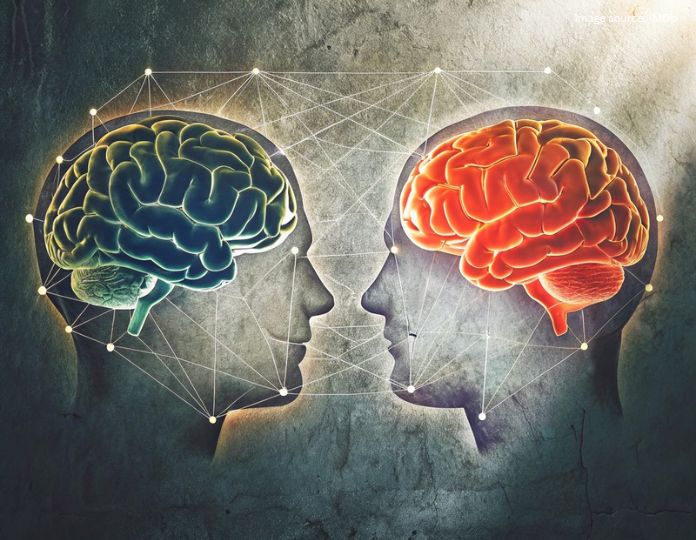
One important distinction here is familiarity versus recollection. Recollection involves retrieving specific information about an experience: “I remember seeing this place last summer.” Familiarity is less specific: “I feel like I’ve been here before.” These processes can function, to a certain degree, independently. When a person experiences déjà vu, they may feel a strong sense of familiarity. However, they may be unable to recall a specific memory that could explain this feeling (Cleary, 2008).
One way of interpreting déjà vu is in terms of this distinction. The brain can detect similarities between the current experience and information stored from previous experiences and generate a feeling of familiarity even when conscious recollection is unable to identify the source. This has led to experimental and neurological studies of the interactions between the hippocampus, parahippocampal regions, and other medial temporal-lobe structures involved in recognition and memory (Brown, 2003; Cleary et al., 2012).
Scientists, however, have not identified one brain region or one “glitch” that accounts for all déjà vu experiences. Instead, research suggests that déjà vu may result from the complex interaction of systems involved in memory, perception, attention, and familiarity (Brown, 2003). This makes the phenomenon particularly useful for neuroscience. Understanding why familiarity can occur without conscious recollection can provide insight into how the brain constructs our sense of remembering.
Why Does Déjà Vu Happen? Major Theories
Although researchers have not established the exact cause of déjà vu, they have proposed several explanations based on how the brain processes memory, attention, perception, and familiarity. Brown (2003) reviewed major explanations of déjà vu and identified several broad theoretical approaches, including memory-based, attentional, dual-process, and neurological accounts. Rather than pointing to a single “glitch,” these theories suggest that déjà vu may occur when different cognitive processes produce signals that do not completely agree with one another.
The familiarity-based account is one of the influential explanations. Recognition memory typically involves two processes: familiarity and recollection. Familiarity is the feeling of having encountered something before, while recollection involves recovering information about the previous encounter. Cleary (2008) suggested that déjà vu can occur when a person experiences a strong sense of familiarity but cannot determine the source of that familiarity. In this situation, a person may feel that a situation is familiar without being able to remember when or where they experienced it.
The second explanation is the similarity and context account. Cleary et al. (2012) suggested that déjà vu may occur when a novel environment has subtle structural or spatial similarities to a previously experienced environment. The brain can detect these similarities even if the person cannot consciously recall the earlier experience. Experimental research using virtual environments found that similarities in spatial configuration could increase feelings of familiarity and déjà vu (Cleary et al., 2012). This helps explain how an unfamiliar place can sometimes seem strangely familiar even without a conscious memory of having been there before.
A third theory is dual processing, which proposes that normally coordinated cognitive processes can briefly become out of synchronisation. Brown (2003) discussed the possibility that differences in the timing of cognitive processing could cause familiarity to arise before contextual information is available to explain it. Another related explanation involves divided attention. In this process, the brain may process information outside conscious awareness before a person directs full attention toward it. When conscious awareness catches up, the information may already carry a familiarity signal, creating the impression that the moment has happened before (Brown, 2003). Researchers continue to investigate these theories, but they have not confirmed any single explanation as the definitive cause of déjà vu.
Triggers and Conditions Associated With Déjà Vu
Unusual interactions between memory, attention, and perception may increase the likelihood of déjà vu. One possibility is that the current setting is similar to a location or circumstance encountered in the past, enabling subtle parallels to produce familiarity without conscious memory. Cleary et al. (2012) supported this theory through research demonstrating that similarities in the spatial arrangement of environments can heighten déjà vu experiences. Although the sources discussed here do not establish fatigue and sleep deprivation as direct causes, these factors may influence memory and attention, potentially making familiarity experiences more noticeable.

Certain neurological disorders, most notably temporal-lobe epilepsy, can also be associated with déjà vu. Bartolomei et al. (2004) investigated déjà vu in individuals with temporal-lobe epilepsy and reported an association between memory-related processes and déjà vu experiences. Similarly, Warren-Gash and Zeman (2014) examined the distinction between ordinary déjà vu and déjà vu associated with epilepsy. These findings are significant because they demonstrate that while déjà vu in healthy individuals is not necessarily a sign of epilepsy, it can sometimes be associated with neurological activity (Bartolomei et al., 2004; Warren-Gash & Zeman, 2014).
Most of the time, déjà vu is harmless and fleeting. When episodes become unusually frequent or prolonged, or occur alongside symptoms such as loss of awareness, confusion, unusual movements, or seizures, medical evaluation may be appropriate. Neurological research is particularly interested in these cases because they can provide insight into the brain systems involved in memory and familiarity (Bartolomei et al., 2004; Warren-Gash & Zeman, 2014).
What Does Research Tell Us?
Rather than being proof that an event has actually occurred before, experimental and neurological research indicates that déjà vu is strongly associated with the brain’s familiarity system. Research on recognition memory distinguishes between familiarity and recollection, showing that a person can experience a sense of familiarity without being able to retrieve the specific details of a previous encounter (Cleary, 2008). Therefore, someone may experience a strong sense of recognition even when they cannot recall a particular memory that explains it.
Research on jamais vu, the apparent opposite of déjà vu, provides an interesting comparison. Experiments by O’Connor and Moulin found that prolonged repetition of familiar words can make them suddenly feel strange or unfamiliar, illustrating how the experience of familiarity can be altered through repetition and cognitive processing (O’Connor & Moulin, 2008). This suggests that familiarity is not simply a fixed property of memory but can be influenced by how information is processed.
Nevertheless, scientists are still working to understand exactly how these mechanisms produce the conscious feeling of déjà vu. Research has connected déjà vu with memory and familiarity systems, but the precise mechanism responsible for the feeling that “I have experienced this before” in the absence of a matching conscious memory remains unresolved (Brown, 2003; Cleary, 2008). Therefore, déjà vu continues to be a fascinating illustration of the interplay between perception, memory, and consciousness, a phenomenon that neuroscience has yet to fully understand.
Conclusion
Déjà vu is more than a curious feeling of having “been here before.” Neuroscience research suggests that it reflects a complex interaction between familiarity, recollection, perception, attention, and memory. The brain can generate a powerful sense of familiarity even when conscious recollection cannot identify a genuine previous experience. Studies of spatial similarity, recognition memory, and temporal-lobe activity have provided important clues. Additionally, research on related phenomena, such as jamais vu, further demonstrates how flexible the brain’s familiarity signals can be.
However, no single theory or brain mechanism fully explains déjà vu. For most people, it is a brief and harmless experience. Its connection with temporal lobe activity provides researchers with a valuable opportunity to understand how memory and recognition are organised in the brain. In particular, it helps them explore how these processes are organised and connected. Ultimately, déjà vu shows that the feeling of remembering and the act of remembering are not always the same thing. Understanding this distinction may help scientists explain how the brain constructs our sense of familiarity. More broadly, it may also help them understand how we experience reality itself.
References +
- Blanchfield, T. (2026, April 30). Déjà vu: Its meaning and why we experience it. Verywell Mind.
- Cleveland Clinic. (2025, June 17). That strange feeling of déjà vu—Explained. Health Essentials.
- Déjà vu experiences in healthy subjects are unrelated to laboratory tests of recollection and familiarity for word stimuli. (2013). Frontiers in Psychology, 4, 881. https://doi.org/10.3389/fpsyg.2013.00881
- Futura. (n.d.). “Déjà vu”: What scientists have discovered is even stranger! Futura Sciences.
- Neurominded. (2023, August 29). Déjà vu: The neuroscience behind the mysterious phenomenon. Inspire the Mind.
- Space Online. (2023, June 13). 10 intriguing theories explaining déjà vu. Medium.
- Xu, Z. (2025). Exploring the mechanisms of déjà vu: Neurological and psychological perspectives. Transactions on Materials Biotechnology and Life Sciences, 8, 149–154. https://doi.org/10.62051/yg1j8434