


According to the World Health Organisation (2025), autism, also known as Autism Spectrum Disorders (ASD), is a condition consisting of diverse groups. Autism is characterised by difficulty in communication and social interaction, a typical pattern of activities and behaviours, difficulty transitioning from one task to another, and unusual reactions to sensations.
Autism manifests differently across individuals as needs and abilities vary over time. As it is known as a spectrum disorder, it implies that some individuals can live independently, whereas others require lifelong care and support. The support and care provided by family members and society can play a prominent role in determining the quality of life for individuals with autism. Research has revealed several causes for autism.
Factors include advanced parental age, prematurity, diabetes during pregnancy, birth complications, and exposure to certain medication during pregnancy. Individuals with autism face stigma and discrimination; they are often deprived of health care, formal education, and opportunities to engage in their community. The refrigerator mother theory, which explained autism and what caused autism, is one of the controversial theories because the caregivers, especially the mothers, were blamed for their children’s condition. When this theory was first proposed, it was reported that it hurt the sentiments of many mothers.
Read More: Early Childhood Adversity and Brain Development: A Neurodevelopmental Perspective
Early Infantile Autism
1. Leo Kanner and the Origin of the Term

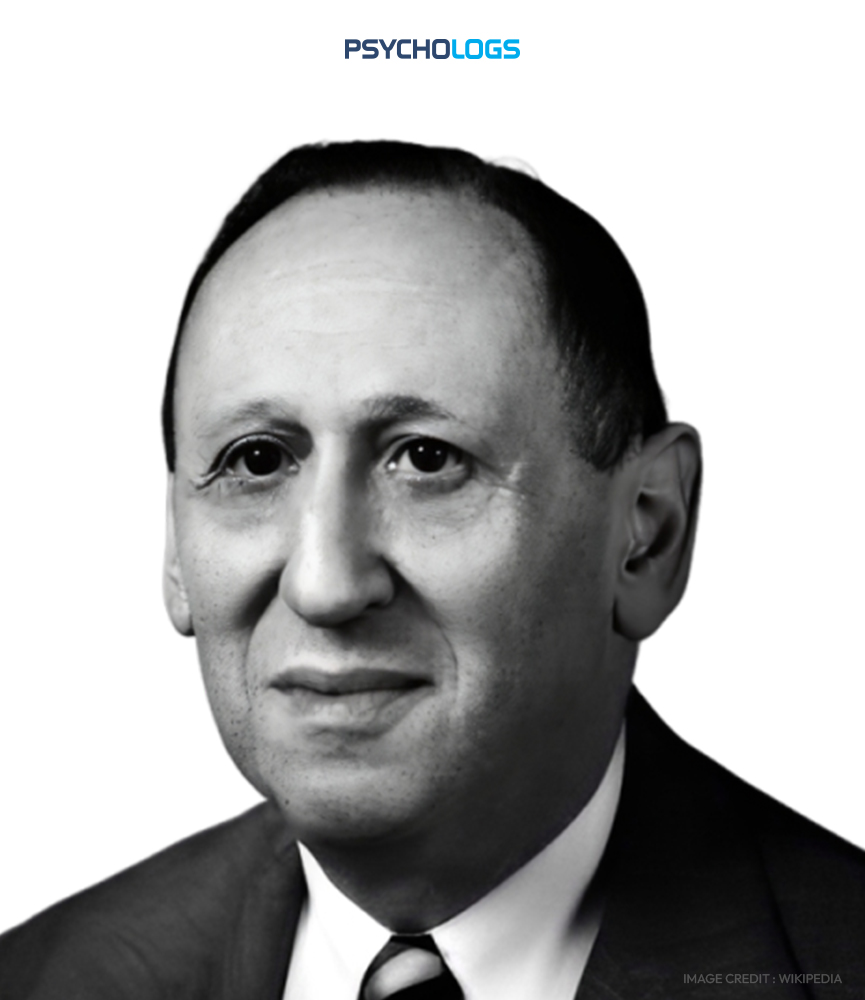
Leo Kanner was a child psychiatrist who introduced Early Infantile Autism in his article. This condition of Early Infantile Autism occurs before the age of two. Originally, Eugen Bleuler coined the term autism in the year 1911. He referred to the behaviour as being associated with schizophrenia. Leo Kanner published two important articles that are still discussed today. The first was ‘Problems of Nosology and Psychodynamics of Early Infantile Autism’ and the second was ‘Autistic Disturbances of Affective Contact’ in 1943.
2. Kanner’s First Article and the Refrigerator Mothers
In his article ‘Problems of Nosology and Psychodynamics of Early Infantile Autism’, he reported that autistic children were cared for and reared by mothers who were not emotional and warm. These mothers later came to be known as ‘The Refrigerator Mothers’. Furthermore, other groups of child psychiatrists in the US also claimed that stress might be psychogenic in nature.
3. Kanner’s Eleven Patients
In 1938, Kanner had eleven child patients in his clinic. He observed each of the patients. Kanner, in his article, reported their ages as between two and eight years, and he also stated that their behaviour was peculiar and that something like this was never reported in psychiatry. Donald, Frederick, Richard, Paul, Barbara, Virginia, Herbert, Alfred, Charles, John, and Elaine became the first eleven children described with Kanner Syndrome, a condition Kanner later called Early Infantile Autism.
4. The 1949 Article and the Refrigerator Mother Theory
In 1949, Kanner published an article titled “Autistic Disturbances of Affective Contact.” In his article, Kanner mentioned important details from his observations of his patients. He focused on the behaviour of those children along with information about the background, social status and intelligence capabilities of their parents. This article becomes more important as the final section of his article gave the causal explanation of Autism in children.
Kanner argued that the parents of these children were intelligent, but their mother lacked warmth and portrayed emotional coldness towards children. His explanation came to be known as ‘The Refrigerator Mother Theory’. Mothers of these children were offended and did not agree with what Kanner emphasised (Cohmer,2014).
How was this Theory Dismantled?
Two decades later, Dr Bernard Rimland wrote a book titled “Infantile Autism: The Syndrome and Its Implications for a Neural Theory of Behaviour”. In his book, he dismantled the refrigerator mother theory and the causal explanation proposed by Leo Kanner. Dr Rimland’s work gave a new direction to the understanding of Autism in children.

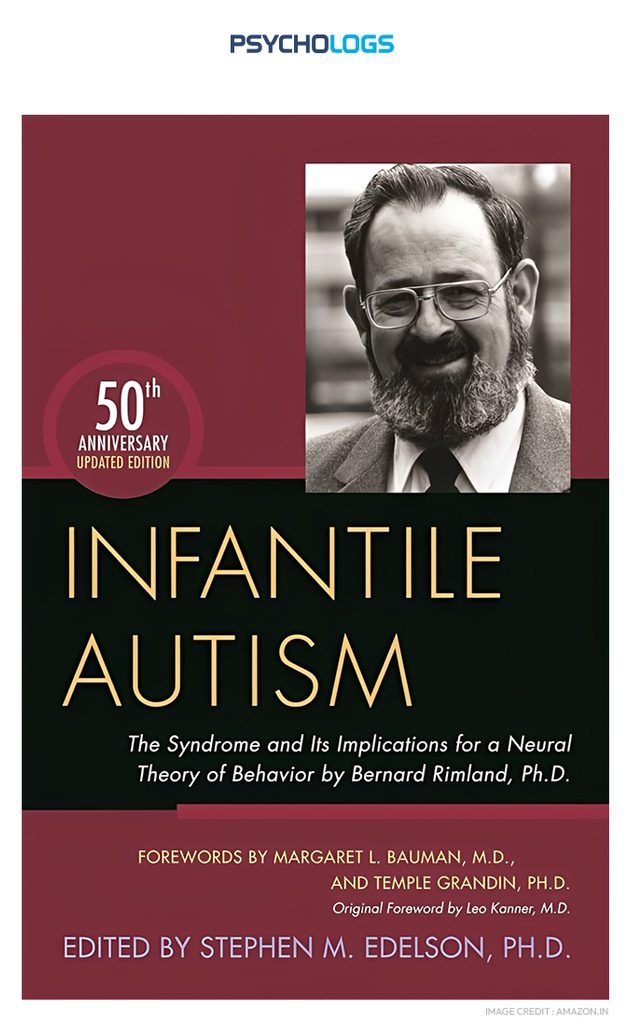
Also, Dr Rimland noticed certain behaviour in his five-year-old son. Dr Rimland and his wife started searching for their son’s condition in many different books. Fortunately, his wife found a book that described their son’s condition. Even though Dr Rimland held an advanced degree in experimental psychology, this was the first time he got to know about Autism as a condition.
Dr Rimland and his wife wanted their son to get better and lead a healthy life. From this point, their journey started by reading various research articles and papers in order to understand the condition. Dr Rimland was a civilian researcher with the US Navy. When they came across the refrigerator mother theory, they were both ridiculed for the causal explanation proposed by Kanner and did not agree with it. Dr Rimland spent five years rigorously working on his groundbreaking work Edelson,2014).
Dr Rimland’s Explanation for Autism
1. Emphasis on Biology and the Role of Genes
In chapter three of his book, Dr Rimland gave a clear, concise and logical explanation for why psychogenic factors are not the only cause of autism. He proposed a clear explanation of how autism was more consistent with biological factors. He argued with facts such as autism affects 3 to 4 boys for every one girl. Symptoms of Autism were similar to those of organic brain damage. His work also drew attention to the lack of research present on psychogenic views. Dr Rimland advocated that autism was also caused by the gene- environment interaction.
2. Diagnosis
Autism was confused with schizophrenia. Dr Rimland gave a clear distinction between autism and schizophrenia. He stated that autism and schizophrenia have two different patterns of onset. They both differed in language and physical ability. Prominently, hallucinations were a major feature of schizophrenia. For convenience, he created a checklist for parents, which helped them to better understand their child’s condition. It was termed ‘Suggested Checklist’. Parents filled out the forms and sent them to Dr Rimland. Along with it, parents mentioned additional symptoms which they noticed in their children. This helped Dr Rimland to revise the checklist promptly.
3. Cognition and the Reticular Formation
Dr Rimland states that individuals with autism had difficulty in relating to what is happening in their surroundings, which means individuals with autism lacked awareness about their environment. In his book, he wrote, “It is possible to trace its diversity of symptoms and manifestations to a single critical disability: The child with early infantile autism is grossly impaired in a function basic to all cognition: the ability to relate new stimuli to remembered experience.” Further, he also stated that certain dysfunction in the brainstem can lead to autism. The reticular Formation is responsible for filtering incoming stimuli, regulating arousal and attention and the sleep-wake cycle. However, brain autopsies did not support his hypothesis (Edelson,2014).
Did Leo Kanner’s Work Influence Others?
The answer to this question is yes. Dr Lorna Wing, a British psychiatrist, was inspired by Kanner’s work. initial ideas served as a broader aspect of her study. In 1979, she studied the prevalence of Autism among children with special needs. Her results were similar to those of Kanner, which showed IQ’s below 70, but along with it she also identified a larger group of children having difficulty in communication, social interaction and repetitive behaviour. Although children from her study did not report all the symptoms as proposed by Kanner, Dr Wing advocated that these children were on a spectrum. Dr Wing’s work has allowed researchers to understand Autism in spectrum ( Hamidi,2024).
The Present
The current diagnostic systems that are used to diagnose psychological and neurodevelopmental disorders, DSM-5 and ICD-11, have laid a structural framework and diagnostic criteria for Autism Spectrum Disorder. They define autism as “ persistent differences in social communication and social interaction, and restricted or repetitive patterns of behaviour, interests, or activities”.
Researchers view autism as a dimensional condition rather than a discrete category. Individuals with autism report an elevated rate of anxiety, depression, self-harm ideation, isolation, etc. Autism impairs regular functioning as it becomes difficult to perform routine tasks in adolescence and adulthood; this creates unemployment and social isolation (Musich,2026).
Interesting Facts
- Earlier, people thought autism was a rare condition.
- In India, Autism Spectrum Disorder affects 1 in 65 children between the ages of two and nine.
- An estimated 1.8 to 2 million children in India have autism.
- In a country like India, the research and literature for Autism is not adequate as compared to developed countries; hence, it becomes difficult to estimate the acute epidemiological details(Uke et al.,2024).
- Overall, the condition is more prevalent in boys than girls, and the ratio of boys to girls is 3:1.
- The revised version of DSM-5 recognised autism as Autism Spectrum Disorder, which made it an umbrella term for other subcategories.
- Earlier, autism had three categories, namely Pervasive Developmental Disorder (PDD), Asperger’s disorder, and Autistic Disorder(SARRC,n.d.)
Conclusion
The Refrigerator Mother Theory remains one of the most controversial explanations ever associated with autism. Reports suggest that Dr Leo Kanner publicly apologised at a conference for hurting the sentiments of mothers with children diagnosed with autism. Dr Bernard Rimland and his noteworthy book dismantled the allegations and wrote a book with concrete evidence and facts, which changed the narrative of autism from psychogenic to biological. There was a lack of research on the causes of autism, but after the groundbreaking work done by Dr Rimland. It allowed other scholars and researchers to navigate the field more easily.
References +
- Uke, P., Gaikwad, S., Vagha, K., & Wandile, S. (2024). Unravelling the Spectrum: A Comprehensive Review of Autism Spectrum Disorder in India. Cureus, 16(6), e62753. https://doi.org/10.7759/cureus.62753
- Association for Child and Adolescent Mental Health. (2026, February 25). What is autism now? ACAMH. https://www.acamh.org/blog/what-is-autism-now/
- Southwest Autism Research & Resource Centre. (n.d.). Autism through the years. https://autismcenter.org/autism-through-the-years
- Autism Research Institute. (2014). Bernard Rimland’s Infantile Autism: The book that changed autism. https://autism.org/bernard-rimlands-infantile-autism/
- Hamidi A, Persaud N A, Ganti L, et al. (November 17, 2024). Leo Kanner: The Physician and Pioneer of Autism. Cureus 16(11): e73859. doi:10.7759/cureus.73859
- Cohmer, Sean, “Early Infantile Autism and the Refrigerator Mother Theory (1943-1970)”. Embryo Project Encyclopedia ( 2014-08-19 ). ISSN: 1940-5030 https://hdl.handle.net/10776/8149
- World Health Organisation. (2025, September 17). Autism. https://www.who.int/news-room/fact-sheets/detail/autism-spectrum-disorders