


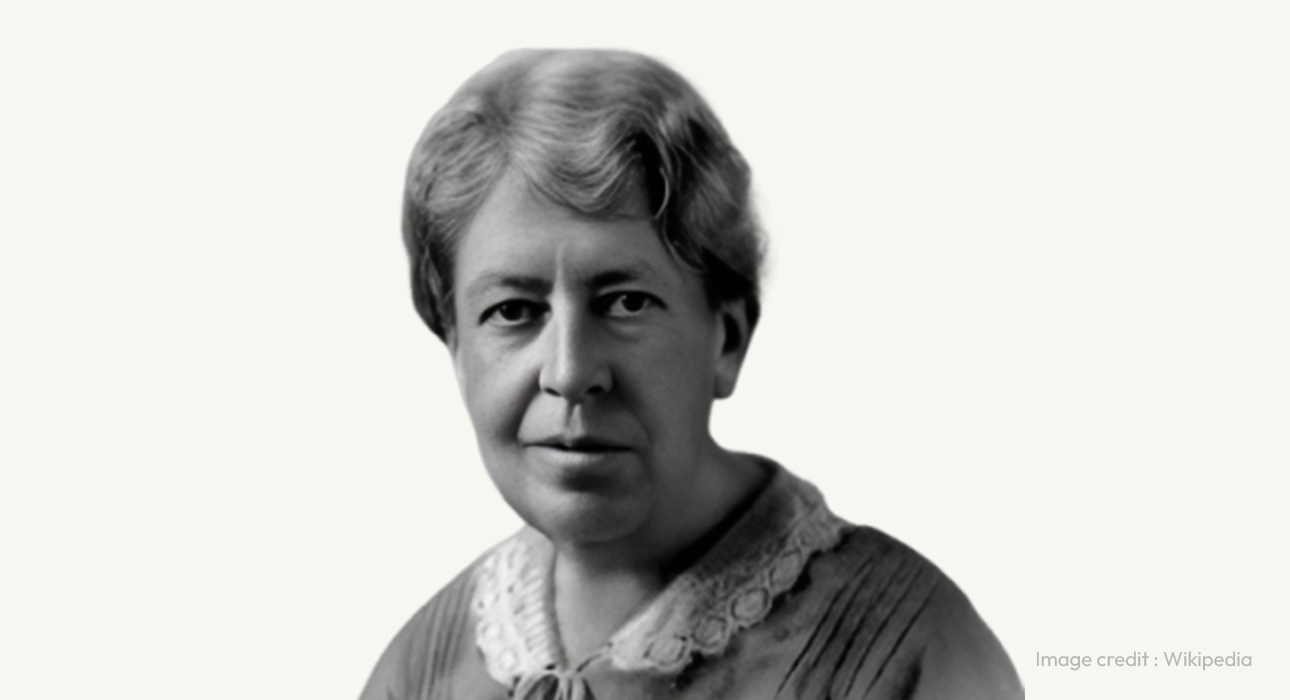
William James called the exam Harvard’s most remarkable doctoral exam. Over the years, he reiterated his belief more than once and had every reason to be confident, as he was a member of the committee that administered Mary Whiton Calkins’s PhD exam in 1895, along with Josiah Royce and Hugo Münsterberg, among other Harvard professors. The exam was not officially recognised by the institution, but the committee members unanimously agreed that Mary had met all the requirements for the degree. However, the degree itself was not awarded to her. Even a century later, Harvard still hasn’t given it to her. So what actually stood between her and the degree she had so clearly earned, and why, more than a hundred years on, hasn’t it ever been undone?
Getting In Through the Side Door
Mary Whiton Calkins was born in 1863 in Hartford, Connecticut, the eldest of five children of a Presbyterian minister who believed strongly in educating his daughter (Furumoto, 1980). She graduated from Smith College in 1885 with a degree in classics and philosophy. She took a teaching position in 1887 in the Greek department at Wellesley College, a women’s college outside Boston. When the philosophy department there began planning a new psychology course, Calkins, already known as a skilled teacher, was offered the chance to lead it, on one condition: she would need a year of formal study in the subject first (Furumoto, 1980).

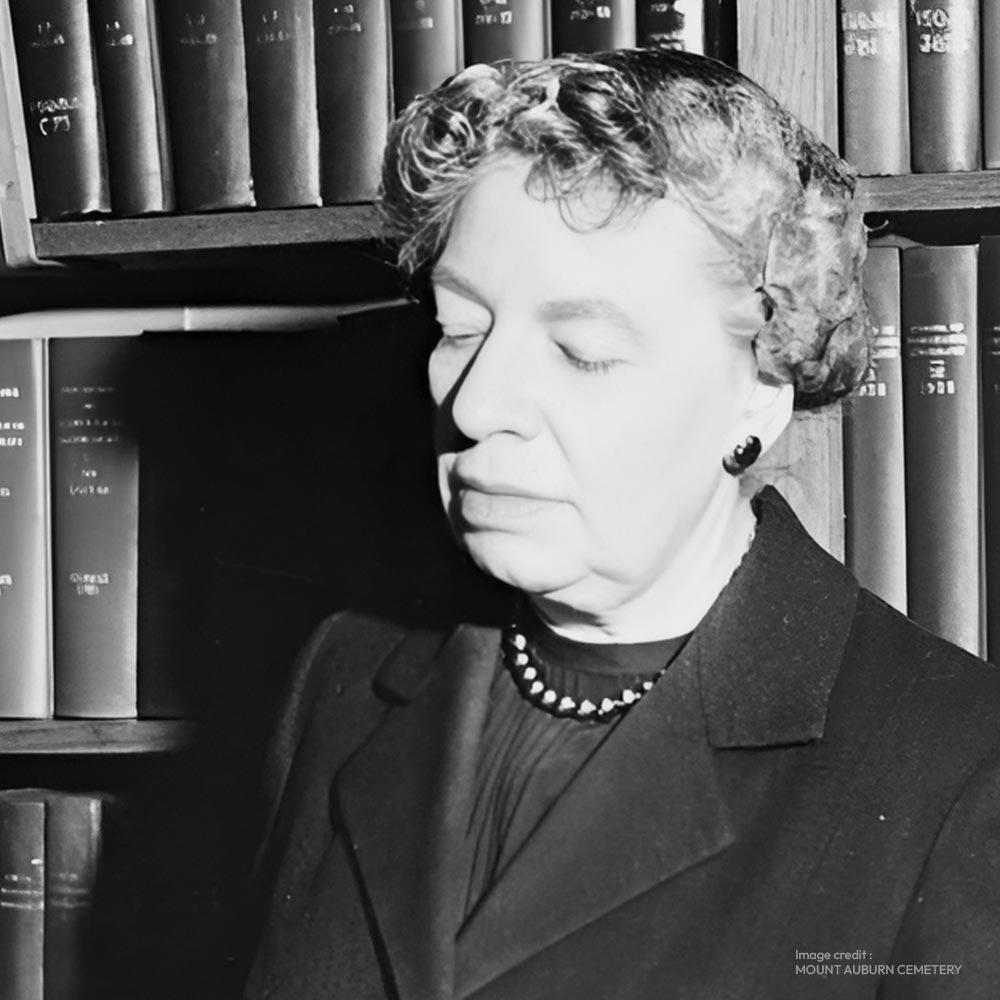
The obvious place to study was Harvard. There was just one problem: Harvard did not admit women. After her father, with Wellesley’s backing, personally petitioned the university on her behalf, Harvard agreed to let her attend graduate seminars, on the explicit understanding that this was not setting a precedent for co-education, and that she remained a Wellesley faculty member seeking outside instruction rather than a Harvard student. She started participating in William James’s seminar in October 1890. One by one, the other students in the class dropped out, until Calkins was the only one left.
Rather than cancel the course, James kept teaching it, the two of them seated on either side of a fireplace, working through James’s newly published Principles of Psychology together. During that period, she organised individual lessons in experimental psychology with Edmund Sanford at Clark University and learned with James and Royce at Harvard. In 1892, once Hugo Münsterberg arrived to head Harvard’s psychology laboratory, she petitioned to study under him as well, and was again permitted to attend, but was not formally registered.
“The Most Brilliant Examination”
During their three years together, Calkins made a significant impression on Münsterberg. In the autumn of 1894, he contacted Harvard’s president, Charles Eliot, asking for her official admission as a PhD candidate and stated that she was the most competent student he had met during his time at the university. The request was denied.
Despite that refusal, an unsanctioned doctoral examination went ahead anyway on May 28, 1895. Calkins’s thesis, “An Experimental Research on the Association of Ideas,” drew on two years of work in the Harvard Psychological Laboratory, and out of it came the paired-associate technique, a method for studying how the mind links pieces of information together, which is still used in memory research today (Harvard Department of Psychology, n.d.). Six professors sat on the examining committee: Palmer, James, Royce, Münsterberg, Hanus, and Santayana.
Their verdict, recorded the next day in an official letter to the Harvard Corporation, was unanimous: she had satisfied every customary requirement for the degree, and her scholarly intelligence was, in the committee’s own words, exceptionally high compared with nearly every other candidate they had examined. James later said, on more than one occasion, that it was the most brilliant PhD examination Harvard had ever had. That same year, the Harvard Corporation took up the philosophy department’s request. It said no. The justification provided was unrelated to her work. Harvard simply did not grant degrees to women.
Turning Down the Consolation Prize
In 1902, Harvard offered a workaround. Radcliffe College, the undergraduate women’s college connected to Harvard, awarded PhDs to Calkins and three other women who finished their graduate studies, but Harvard itself did not. Calkins refused, and her own words explain why better than any summary could: She argued that Radcliffe would serve the best ideals of education by refusing to confer the doctor’s degree.
You will be quick to see that, holding this conviction, I cannot rightly take the easier course of accepting the degree” (as quoted in Furumoto, 1980, p. 66). She had done her research and passed her defence at Harvard, under Harvard’s faculty, in Harvard’s laboratory. Accepting a Radcliffe degree, she felt, would mean pretending she had studied somewhere she hadn’t, just to make her credential easier for the world to accept. She chose to hold out for the degree she had actually earned. It never came.
A Career Built Without the Credential
It is interesting to note how little effect the omitted PhD had on her real influence. Calkins spent her whole career working in Wellesley, where she became full professor in 1898. She created not only the paired-associate method but also a whole new paradigm known as self-psychology, claiming that instead of abstract thoughts or behaviours, the concept of self should be at the centre of psychological science. She authored four books and over a hundred articles in psychology and philosophy.
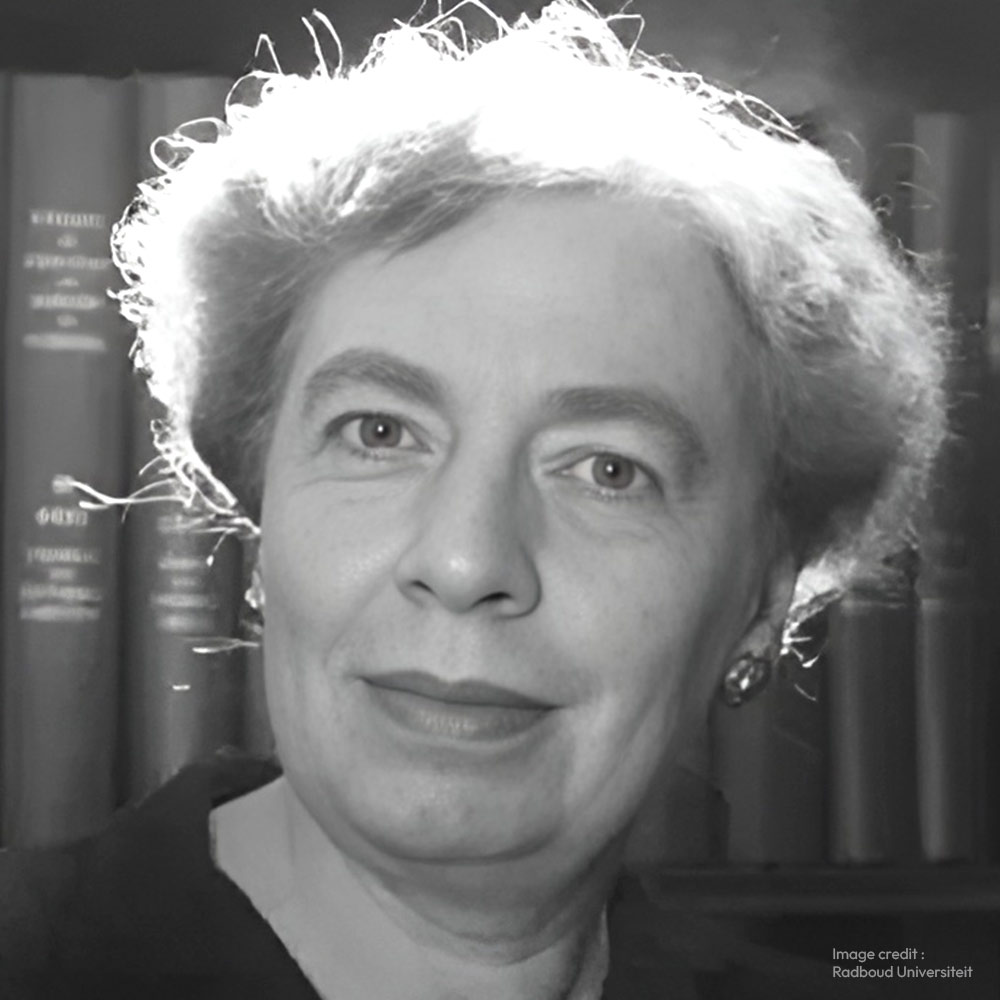
In the year 1905, the American Psychological Association made her its first female president. In the year 1918, the American Philosophical Association followed suit. The Association of Psychology of Great Britain conferred upon her honorary membership in 1928. In 1903, when psychologists ranked the fifty most eminent members of their field, Calkins came in twelfth, ahead of many men who held the degree she’d been denied.
Columbia University and her alma mater, Smith College, each offered her an honorary degree and a faculty position in 1909 and 1910, respectively. She turned both down, choosing to stay at Wellesley for the rest of her career. She had built one of the most respected careers in American psychology without the one piece of paper that was meant to make it official.
The Refusals Keep Coming
Mary Whiton Calkins never got her degree, and the record of people asking Harvard to reconsider is almost as long as her career, and it hasn’t stopped. In 1927, thirteen prominent alumni, including psychologists Robert Yerkes, Edward Thorndike, and Robert Woodworth, petitioned Harvard to grant her the PhD. Harvard said there was no adequate reason to do so, and refused again. In 2002, psychologist Karyn Boatwright and her students at Kalamazoo College launched a fresh campaign, building a website called Justice for Mary Whiton Calkins to gather support. Also in 2005, the American Psychological Association’s own Society for the Psychology of Women added its voice.
In 2016, psychology students at the University of British Columbia picked up the cause, creating an annual student award in Calkins’s name and petitioning Harvard once more. One of the students involved put the frustration plainly: she found it offensive that people still know Calkins best for what Harvard refused her, rather than for what she actually built.
In 2019, a philosophy professor started a new petition that is still active today, and in a turn Calkins herself likely never imagined, her own descendants joined the fight: the Calkins Family Association, led by her relative Nanette Calkins Armstrong, formally signed on in support. Each time, Harvard’s answer has stayed the same. Harvard’s psychology department now hosts a page on its own website laying out the archival evidence that Calkins completed every requirement for the degree, an unusual thing for an institution to publish about a decision it continues to stand by (Harvard Department of Psychology, n.d.).
What Her Story Actually Shows
It would be easy to tell this story as a simple injustice with a clean ending: talented woman denied, later vindicated. That ending hasn’t arrived, at least not yet. Calkins died in 1930, still without the degree, and Harvard has never reversed course, not for the alumni who asked in 1927, not for the students who asked in 2002 and again in 2016, not for her own family, who are still asking today.
Her story shows something less tidy and more honest: recognition and merit don’t always arrive together, and work brilliant enough that James called it the best Harvard had ever examined still couldn’t change an institution’s mind, even a century on. Calkins’s actual legacy was never the degree. Calkins built the paired-associate technique that memory research still teaches. The theory of self-psychology that shaped a generation of thinking about identity. A record as president of two national academic associations. All while the system in front of her refused, every single time, to call her formally Doctor.
References +
- Furumoto, L. (1980). Mary Whiton Calkins (1863–1930). Psychology of Women Quarterly, 5, 55–68. https://doi.org/10.1111/j.1471-6402.1980.tb01033.x
- Hackett, J. E. (2019). To award Mary Whiton Calkins’s doctorate posthumously from Harvard University [Petition]. Change.org. https://www.change.org/p/lawrence-bacow-harvard-edu-to-award-mary-whiton-calkin-s doctorate-posthumously-from-harvard-university
- Harvard Department of Philosophy. (1895, May 29). Letter to the President and Fellows of Harvard College certifying Mary Whiton Calkins’s completion of PhD requirements. Reprinted in Hypatia (1993).
- Harvard Department of Psychology. (n.d.). Mary Whiton Calkins. Harvard University. https://psychology.fas.harvard.edu/people/mary-whiton-calkins
- University of British Columbia, Department of Psychology. (2020). History in the making: UBC Psychology students aim to right a wrong. https://psych.ubc.ca/news/history-in-the-making-ubc-psychology-students-aim-to-right-a wrong
- Young, J. L. (2010). Mary Whiton Calkins [Profile]. Psychology’s Feminist Voices. https://feministvoices.com/profiles/mary-whiton-calkins