


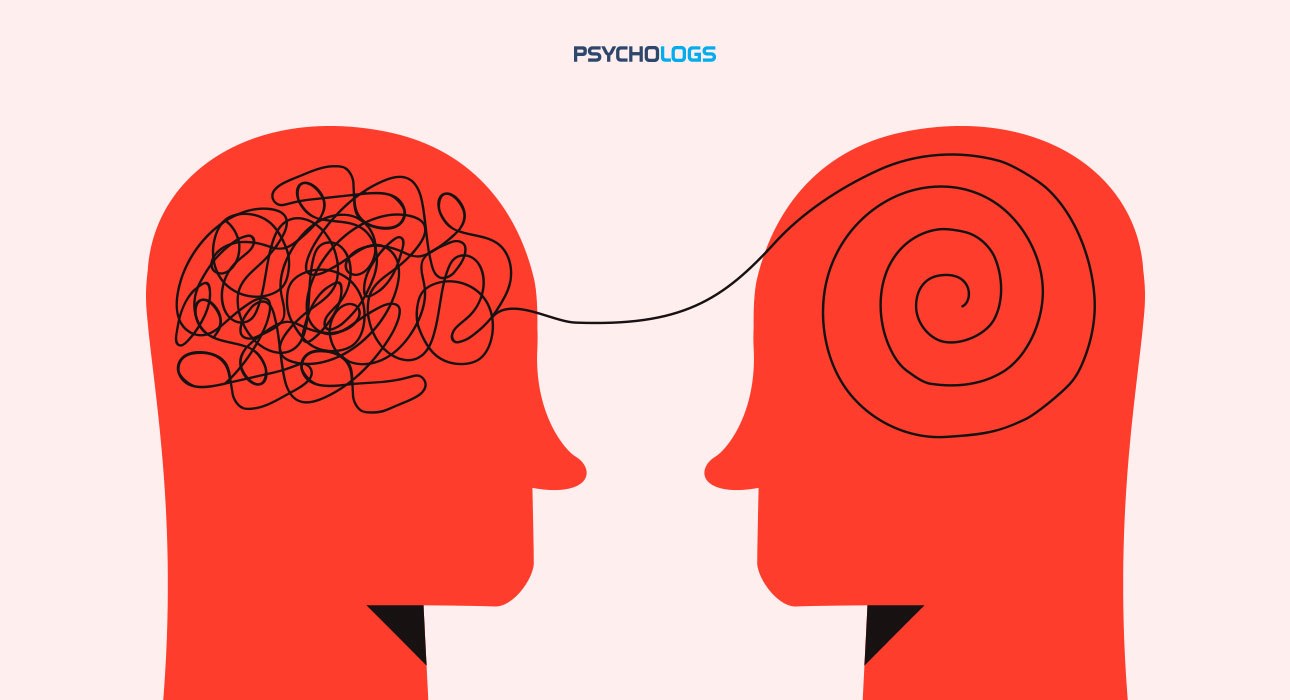
Have you ever gone into a room and then completely forgotten the reason why? Or read a whole page in a textbook, then realised you don’t remember much of anything. Each of these examples illustrates a general phenomenon about the human mind: information does not become memory automatically; it must be taken in, selected, processed, stored, and then getting it back for use by the brain.
The human mind operates like a biological system that receives environmental cues, manages data in the brain, and produces physical or mental reactions. The Information Processing Theory explains the processes that are involved as they turn the individual into an active system that transforms information through different processing stages, ranging from recalling a friend’s telephone number to last-minute studying for an examination (Atkinson & Shiffrin, 1968; Baddeley, 2000).
What is Information Processing Theory?
The Information Processing Theory describes learning and memory as the receipt and processing of information, just like a computer is commonly known to process data. Information is taken from the external world, and it eventually finds its way into the storage space of the brain and is retrieved at appropriate times when needed. Psychologists became more concerned with internal cognitive processes rather than only observable behaviour during the cognitive revolution of psychology in the 1900s.

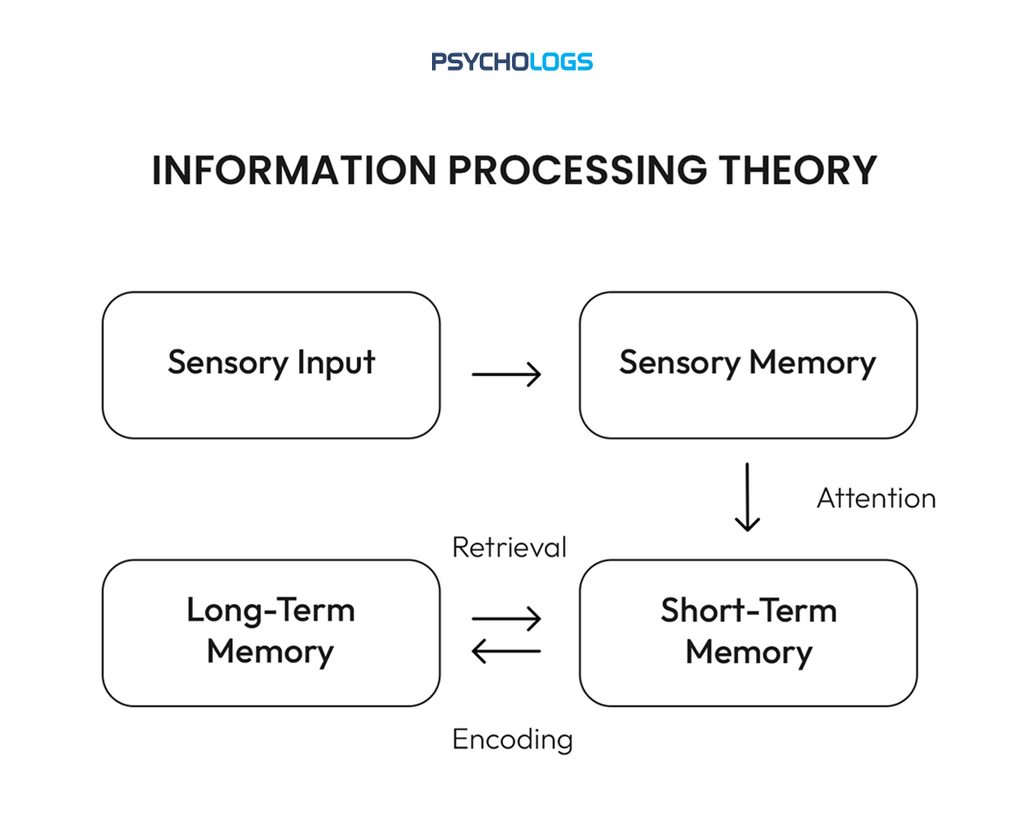
Although the mind is not literally a computer, the computer metaphor helped psychologists describe how information flows within different levels of processing (Miller, 1956; Atkinson & Shiffrin, 1968). Basically, this theory of cognition takes a general view that the following processes are a part of learning and remembering. This approach involves several interconnected processes:
- Receiving sensory information
- Selecting and identifying information with attention
- Encoding information into a form that can be remembered
- Temporarily maintaining and storing the information in working memory
- Transferring the information to long-term memory
- Retrieving stored information when required
Although this sounds very simple, it is important to understand that the processing of information across different stages is not simply one-dimensional; cognitive psychology highlights that people tend to actively interpret the incoming information/messages based on their prior knowledge and prior experiences, with the use of goals, expectations, and the context of learning (Craik & Lockhart, 1972; Baddeley, 2000). This is crucial for understanding memory as the dynamic reconstruction rather than passive recording of past experience.
A Human’s Journey: The Flow of Information
1. Attention: The Gateway to the Processing Systems
Humans are bombarded by far more sensory information than the brain can directly access and encode each of them. Hence, attention allows individuals to select the information most needed to navigate through the world at a specific moment by blocking the processing of unrelated or conflicting stimuli (Broadbent, 1958).
For example, a student may sit in a classroom while hearing traffic, noticing movement outside, and feeling the temperature of the room. Yet his/her selective attention allows the student to focus primarily on the teacher’s explanation. When attention is divided or repeatedly interrupted, learning may become more difficult because fewer cognitive resources are available for processing the relevant material (Baddeley, 2000). However, attention is one of the most crucial factors for effective learning. Important influences include:
- individual goal directedness/motivation;
- novelty of information;
- distractibility;
- difficulty level of the task;
- available cognitive resources.
In today’s lifestyle, attending to things effectively has become even more difficult as individuals encounter a multitude of distractions from notifications on social media to continuous digital streaming. If a stimulus never gets brief attention to store a trace in working memory, it may never be able to be meaningfully encoded into long-term memory.
2. Sensory Memory: the first brief stop in the processing system
Initially, the sensory memory registers data from the outer world. Visual memory is called iconic memory, whereas auditory memory is called echoic memory. Iconic and echoic memory allow us to retain traces of incoming information for short periods of time after the external stimuli have disappeared (Atkinson & Shiffrin, 1968). This brief storage is important as the environment continuously changes. Without sensory memory, experiences would disappear immediately because of the arrival of new information. Attention determines which information receives further processing and which information holds no significance.

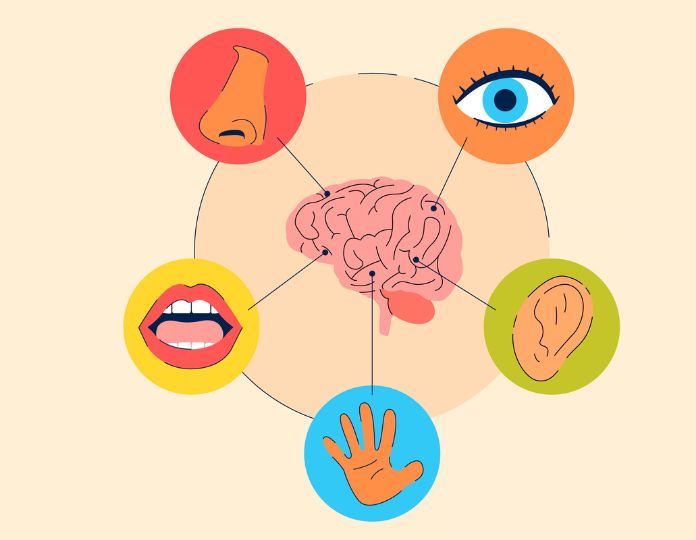
For instance, if someone briefly glances at a street sign and then looks away, a visual impression may remain momentarily present. Similarly, after someone finishes speaking, the sound of the final words may linger briefly, allowing the listener to process what was said. Sensory memory is therefore not designed for permanent storage. Its primary function is to provide a temporary buffer that allows the cognitive system to select information for further processing (Atkinson & Shiffrin, 1968).
3. Working memory: Mind’s Active Workspace
The working memory is defined as the internal workspace that people use to store and calculate the information they are currently dealing with; therefore, it stores everything, including their ability to use logic, reasoning skills, comprehension, or problem-solving. Each one has a general model created by Baddeley and Hitch consisting of its own processes to accomplish this work:
- The central executive processes help to co-ordinate cognitive resources and attention.
- The phonological loop deals with verbal information, both spoken and written;
- The visuo-spatial sketchpad stores visual and space-related representations of the world,
- The episodic buffer is a temporary storage for integrating information that is given by the aforementioned subsystems of working memory, bridging working memory and long-term memory (Baddeley, 2000).
Working memory has limited capacity; too much information at once can lead to cognitive overload. For example, solving a mathematical problem requires a person to hold numbers in mind while simultaneously performing operations. Presenting complex material in manageable parts may make learning easier than overwhelming with large amounts of information simultaneously.
4. Encoding: Transferring information in the memory system
Encoding describes the process where information is successfully transferred to a format people can store in long-term memory. Therefore, this means that how easy it is to retrieve information depends on how well they have encoded. According to the levels of processing framework, information processed with meaningful connections is generally remembered better than information processed only at a superficial level (Craik & Lockhart, 1972).
There are certain strategies for efficient encoding:
- Elaboration: Connecting new information with existing knowledge,
- Organisation: Grouping information into meaningful categories,
- Imagery: Creating mental images associated with concepts,
- Meaningful rehearsal: Focusing on understanding rather than mechanical repetition;
- Retrieval practice: Actively recalling information instead of only reviewing it (Roediger & Karpicke, 2006).
These strategies serve to point out an important concept in the information processing theory that learning becomes easiest when an individual is more active rather than passive.
5. Long-Term Memory: More or Less Permanent Storage
Long-term memory allows us to retain and access knowledge, skills, personal experiences, and much more. This includes things such as parents’ phone numbers, how to ride a bicycle, or memories of the last vacation. Cognitive psychologists typically divide long-term memory into two main categories (Squire, 2004):
- Declarative memory: Knowledge that individuals can consciously recall, i.e., capitals of countries or the names of classmates.
- Episodic memory: One’s recollection of personal experiences, such as a specific birthday party.
- Semantic memory: One’s stored general knowledge and concepts, like Earth is round, or the sun rises in the east.
- Non-declarative memory: This type of long-term memory allows us to learn and perform tasks automatically without needing conscious awareness or deliberate recall, such as tying shoe lace putting on sunglasses.
By balancing conscious reflection with automatic habits, long-term memory shapes individuals’ identity and allows them to seamlessly navigate daily life. The initial way of encoding information has a significant impact on future retrieval (Tulving & Thomson, 1973).
6. Retrieval: The Act of Remembering
We call the process of pulling information out of your long-term memory retrieval. For a successful retrieval process, not only must a piece of information exist within the memory, but also appropriate retrieval cues must be present (Tulving & Thomson, 1973). For instance, someone might be unable to answer a question on a test, but as soon as he/she encounters a relevant cue, the information suddenly pops up. People can retrieve information through several processes:
- Recall: The ability to repeat information from memory without being given a cue (e.g., an essay question).
- Recognition: The ability to identify information from a list of options (e.g., a multiple choice question).
- Re-learning: The ability to perform a task or remember a piece of information faster when it is learned before.
Research has demonstrated that attempting to retrieve information can aid further retention. Roediger and Karpicke’s (2006) study showed that repeated testing helped improve long-term retention, explaining why flash cards or using study questions can be a great tool for test preparation.
Uses of Information Processing Theory in Different Areas
Because of its clear explanations of how people learn and remember things, information processing theory is central to educational psychology. This theory suggests that there are several steps that a learner must undergo, such as:
- paying attention,
- encoding the information,
- relating it to prior knowledge,
- practising retrieval (Mayer, 2002; Roediger & Karpicke, 2006).
Practical Applications for Students:
- Eliminate distractions to improve attention.
- Reduce the cognitive load of difficult tasks by breaking them into smaller chunks.
- Use examples, images, and videos to clarify new concepts.
- Elaborate the information by linking new knowledge to prior experiences.
- Organise information logically with headlines, categories, or mind maps.
- Practice retrieving information through quizzing (Roediger & Karpicke, 2006).
Information processing theory is also a foundation in cognitive psychology, explaining how perception, attention, reasoning and memory occur. However, psychologists also acknowledge that a computer analogy may not completely capture the complexity of human thought, since many factors, such as emotion, cultural background, and motivation, influence how people think. The field continues to study new ways of explaining how the human mind works, moving beyond simplistic models.
Conclusion
Information Processing Theory: Information processing theory paints a vivid picture of the way people transfer their experience into a lasting body of knowledge. Information may enter the senses, but a limited portion grabs attention. Working memory can temporarily hold and manipulate that information before the brain stores it in long-term memory. Finally, people can retrieve this stored information whenever they need it in their everyday activities.
This theory provides a set of practical guidelines that students and educators can use for better understanding and promoting efficient learning. Information processing theory has taught that there is much more about learning than simply getting information. It relies on deep understanding of it and how people connect it to the things they already know. The mind may receive information in seconds, but meaningful learning begins when people choose to attend, understand, and remember the information.
References +
- Atkinson, R. C., & Shiffrin, R. M. (1968). Human memory: A proposed system and its control processes. In K. W. Spence & J. T. Spence (Eds.), The psychology of learning and motivation: Advances in research and theory (Vol. 2, pp. 89–195). Academic Press. https://doi.org/10.1016/S0079-7421(08)60452-1
- Baddeley, A. (2000). The episodic buffer: A new component of working memory? Trends in Cognitive Sciences, 4(11), 417–423. https://doi.org/10.1016/S1364-6613(00)01538-2.
- Baddeley, A. D., & Hitch, G. (1974). Working memory. In G. H. Bower (Ed.), The psychology of learning and motivation: Advances in research and theory (Vol. 8, pp. 47– 89). Academic Press. https://doi.org/10.1016/S0079-7421(08)60452-1.
- Broadbent, D. E. (1958). Perception and communication. Pergamon Press. https://doi.org/10.1016/C2013-0-08164-9.
- Cepeda, N. J., Pashler, H., Vul, E., Wixted, J. T., & Rohrer, D. (2006). Distributed practice in verbal recall tasks: A review and quantitative synthesis. Psychological Bulletin, 132(3), 354–380. https://doi.org/10.1037/0033-2909.132.3.354.
- Craik, F. I. M., & Lockhart, R. S. (1972). Levels of processing: A framework for memory research. Journal of Verbal Learning and Verbal Behaviour, 11(6), 671–684. https://doi.org/10.1016/S0022-5371(72)80001-X.
- Mayer, R. E. (2002). Rote versus meaningful learning. Theory Into Practice, 41(4), 226– 232. https://doi.org/10.1207/S15430421TIP4104_4.
- Roediger, H. L., III, & Karpicke, J. D. (2006). Test-enhanced learning: Taking memory tests improves long-term retention. Psychological Science, 17(3), 249–255. https://doi.org/10.1111/j.1467-9280.2006.01693.x.
- Squire, L. R. (2004). Memory systems of the brain: A brief history and current perspective. Neurobiology of Learning and Memory, 82(3), 171–177. https://doi.org/10.1016/j.nlm.2004.06.005.
- Tulving, E., & Thomson, D. M. (1973). Encoding specificity and retrieval processes in episodic memory. Psychological Review, 80(5), 352–373. https://doi.org/10.1037/h0020071.
- NOTE: The DOI initially attached to Atkinson & Shiffrin should not be used for that 1968 chapter; that DOI belongs to the later Working Memory chapter. For Atkinson & Shiffrin, it is safer to cite the book chapter without a DOI.